
Anyone who knows anything of my life story knows it is complex and convoluted, impossible to follow unless you are one of the main characters. This great meme “when someone asks about your family and you’re trying to decide if you should tell them the Disney or Jerry Springer version” is beyond apt. Up until 2008, I thought my story to be relatively “uneventful, normal and straightforward”. In January of that year, an unexpected FB message arrived: “You don’t know me and I don’t mean to upset you, but I have reason to believe you might be my sister”. In one way, it upended everything. In another way, I had already developed a strong sense of self through coaching support and personal and spiritual journey.

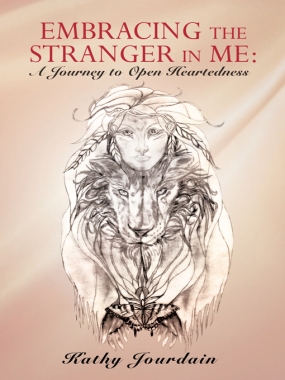
It became an intriguing drama as story upon story about birth family members unfolded, some more complete than others. I wrote about what I knew at the time in my memoir, Embracing the Stranger in Me: A Journey to Openheartedness. I had the opportunity to meet my birth father, my full sister and my half-sister and their families. There was a fair bit known about the paternal lineage – although, probably not surprisingly, not everything, as we discovered the actual story of my birth grandfather. He was an alcoholic and it had been assumed he had died derelict on the streets of Halifax. However, meeting a cousin, the daughter of my birth father’s brother, revealed that story was much different and he had died in a care facility as a recovering alcoholic who thought he had had a pretty good life.
The Mystery of Our Birth Mother
However, for my full sister, Deb, and I, the story of our birth mother was much more opaque. We knew a few things. She had left her family behind (my birth father, sister and me), taking off with a friend of our birth father, for Montreal. In her defence, she was just twenty years old with a three-year-old and an infant in the early 60s. She may have had postpartum depression and she was promised they would come back for the babies.
For a long time, we did not what happened to her in Montreal or how she ended up in British Columbia where she established a good life for herself. She married and she and her husband adopted a daughter because she could no longer have babies. Our birth mother died in 2007. I never did have the chance to meet her although Deb did. It was her death that sparked the search for me.
Now friends with her adopted daughter, we learned more about our birth mother’s life, including the fact she had been prostituted out by the man she had trusted and gone to Montreal with. Speculating here, but the shame of that made her want to forget about life before that, including the fact she had two daughters. She was very secretive and never shared that part of her history with her husband or daughter while she was alive.
The Bigger Mystery of Our Birth Grandmother
Deb and I knew our birth mother’s mother – our grandmother – had had multiple children with multiple dads and we had been told she had given them all away. Not even clear if that meant adoption. And that is all we knew. Until a recent conversation with a biological cousin whose mom was sisters with our birth mom. My cousin happens to also be a Kathie – different spelling and different variation of our formal names.
This connection came to be because my sister and I agreed to enter our DNA sample to Ancestry.com, in the wondering of whether we would find out information related to our maternal lineage – although neither one of us applied much effort to it. Interestingly, we did discover we didn’t quite know everything about our paternal lineage as another half-sister contacted us a couple of years ago now. That is a story for another time.
Mysteries Solved
Kathie has done a significant amount of research – through Ancestry and in the search for birth, marriage and death certificates. Our birth mom was #2 of 8 and Kathie’s mom was #3 and the first baby our birth grandmother – Audrey – kept, at the behest of her mother and stepfather. Baby #1 was given up for adoption and the trail to find her is cold. Baby #2 was our birth mother and we know she ended up with aunts and uncles – not once but twice, due to the death of the aunt and uncle who originally took her in.
Babies #4 and #5 were with a man Audrey moved in with and, after he left, she moved in with another man and babies #6, 7 and 8 arrived. You have to remember this was back in the 1940s and 50s. This kind of life journey was almost unheard of and was certainly not glorified. I have no idea of the amount of trauma that had to be present or what the circumstances of their lives must have been.
Illuminating Lineage
The gift in talking to my cousin was the filling in of so many missing details – including the name of our birth grandmother and her parents – the gift of illuminating lineage. I hadn’t realized how powerful this could be. One side of the lineage had been pretty fully sketched out; the other side was obscured or in shadow. You know it is there, but you can’t access it.

If you can imagine a tree where one side is lit and the other side is dark and you can’t even imagine the shape of it except you believe there must be some kind of symmetry or balance. Then, imagine the whole tree is lit and now you can see it in detail and what you cannot see likely does not matter too much anymore.
The Power of Illumination
I hadn’t realized the disparity in weight or lack of balance that this created – until the other side of the family tree was illuminated. Now in my mind’s eye, I can see, or more accurately sense, all the branches – the full tree. On one level, the names don’t matter, the symmetry is there. Yet, knowing the names also has meaning and depth. I know my birth grandmother’s name, Audrey, and it makes her more real. I know more of her story and it makes her more real. It takes something that was intangible and makes it tangible. If you have never experienced this, it is far more powerful than it sounds because it happens through many senses, not just through intellectual knowing. It is emotional, psychological, spiritual. It brings a wholeness to something that was like a phantom limb. It is a felt sense about it.
Having experienced everything that I have experienced over the last decade and a half (or really my entire life), I now know these stories are all still evolving. I don’t know what I don’t know. But I am appreciative of this gift of knowing biological lineage – for Deb and me. Blanks have been filled in and this has enlivened a sense of lineage that had been stumped in ways I had not fathomed. It is like it breathes new life and possibilities into my heart, spirit, soul and consciousness. It offers new perspectives and possibilities and brings a sense of wholeness I had not known I lacked. And, it is not necessary to develop relationships with all the biological family who are still alive. It is enough just to know.
Who Do I Mean When I Say, “My Parents”
Note. People often wonder, when I refer to my parents who do I mean? Always, always, my parents are the people who raised me. Their commitment and love are as much and sometimes more of me than the DNA that connects me to biological lineage. I know this is the same for many adoptees, although for sure not all. My biological parents are not my “real parents”, they are my biological parents. DNA does not a family make. Commitment and relationship does.
A Cautionary Note
There are many stories that have been published about joyful reunions, a sense of belonging, and deep relationships that have been forged when biological relatives have connected or reconnected. Some people feel a deep yearning for these kinds of connections. Not everyone who has been adopted or has given a child up feels that way. There is no one uniform experience or desire. Individual wishes and privacy must be respected when this the case. And, once you do connect with biological family, there is no guarantee that it will be warm and fuzzy. In one way, it’s no different than family units that have grown up together. In my situation, the relationships and connections vary – which is to be connected – and the closest relationship is with Deb. This could be because we have the same biological parents, it could be because I do remember her from when we were young or there could be any other range of factors that contribute to this. All this to say, approach these explorations with as much caution as optimism and hope. Not every story has a happy ending.


 Embracing the Stranger in Me