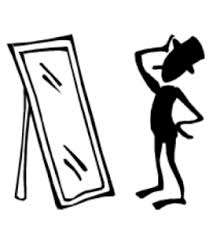
 When you look in the mirror you see your reflection. Sometimes you like what you see, sometimes you don’t and sometimes you are indifferent. The reflection just is. Your response to it is subjective. The response you have to your reflection is telling. It is telling you something about yourself, your state of mind.
When you feel good, you look good. When you feel bad, sad, angry, confused, or stressed it shows up when you look in the mirror. It confirms for you what you already know through the reflection.
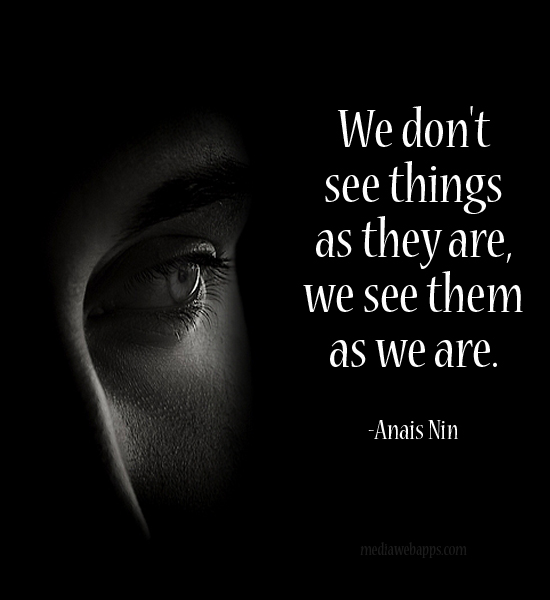 Your outer world is a reflection of your inner world—whether you see it in the mirror or you see it reflected in your environment. When you feel like you are in turmoil, sometimes the solution is as simple as looking at your physical environment and bringing order to chaos. Sometimes that is just a first step.
In the same way that your mirror or physical environment provides a reflection for you – both literal and figurative—so do people in your life. Whenever you have a strong reaction to others, they are reflecting something back to you about yourself. If you really like someone, it is because something about them resonates with you. Maybe they have similar values or set standards you aspire to. Maybe they treat people the way you do or the way you would like to be treated.
It is pretty easy to comprehend the mirror principle as it applies to those aspects of yourself you like or are comfortable with. It is a lot more challenging to understand the mirror principle as it applies to people you can’t stand. In fact, the idea that you could be like that person in any way whatsoever is so incomprehensible that you usually reject it outright when you first hear it. The stronger your reaction to someone else, the more forcefully you reject that idea. Yet, when you learn to set aside your visceral reaction and accept the notion of reflection it becomes one of your most valuable teaching tools on the road to self awareness. And, ironically, the stronger the reaction, the more valuable the lesson to be learned.
The person you are reacting to may be a family member, a colleague or acquaintance or a public figure. The reflection may be a literal reflection. Someone you know lies and it upsets you because you are uncomfortable with the fact that you have also lied. Maybe you lied to someone else. Maybe you haven’t lied to someone else, but you have lied to yourself. This is a more indirect reflection but equally valid.
When you notice that you are having a strong reaction to someone, you need to stop and ask yourself, exactly what aspect of this person am I reacting to. Then you can ask, how am I like this – in my interactions with others or in my relationship with myself.
If you am upset because someone is hard on other people, where are you acting in that way: either being hard on others or being hard on yourself? As long as there is energy there, there is something to be learned.
When you begin to uncover what is being mirrored for you, one of several things can happen. That behaviour no longer resonates for you. You can accept that other people are on their own path and while you may not agree with the behaviour, it is their issue and they will need to deal with their own consequences. Usually there is little that you can do about other people’s actions anyway – that is outside of your circle of control. What you do is in your circle of control.
Another thing that happens when you understand what the reflection is, is that the people who you have these strong reactions to just fade away. They are no longer reflecting anything for us, so you are no longer attracted to their energy and all of a sudden you don’t bump into them anymore, you no longer travel in the same circles or you no longer pay attention to them the way you used to. It’s not something you intentionally do or plan—it just happens.
A third possibility is that as your reaction to them changes, they change. You no longer reflect back to them that behaviour so they no longer exhibit it when you are around them. It is possible that you were eliciting that response in them instead of the other way around. You change yourself, and people around you change.
When you begin to accept the notion that the most troublesome people in your life are your greatest teachers, you begin to see things from a new perspective. Instead of being upset with them, you search inwardly to find the internal source of the upset. As you examine that for heartfelt answers, you make a choice for self awareness and new found peace.

 Embracing the Stranger in Me