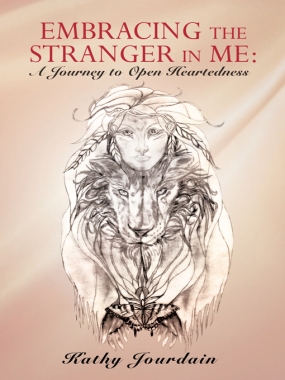

I’ve been doing a lot of thinking about identity lately – sparked, in part, to recently having a First Person Account published by CBC titled “I had a loving family. My life changed at 46 when my birth sister revealed I was adopted. My parents hid my adoption. But somehow, the truth brought us closer.”
I’ve been doing a series of videos over at the Inner Wisdom Lab Youtube channel where I speak to various aspects of identity and offer a few guided visualizations for anyone looking to connect more deeply to their own core essence. And there are more to come.
I have now known about being adopted for 17 years, which seems a bit incredulous. Finding out sparked an identity expansion in some ways. In a moment, everything changed, yet nothing changed – with respect to my life, my immediate family and my sense of identity.
Identity and Core Essence
In thinking about identity, I am curious about what is underneath personality traits, skills, abilities, life events … and, I have arrived at core essence. The most basic and important attribute of self that provides a sense of who we are, the inner foundation of being. This essence is constant. In this 7 minute video, I speak about core essence or identity and, in this 10 minute one, I offer a guided visualization for anyone wishing to connect with their own sense of identity or core essence.
Identity and Roles
Sometimes we know and sense our core essence with absolute clarity. Other times it is obscured by layers and layers of roles, expectations – our own and others, doubt, hubris, the minutia of life, disappointments and external successes collected over the course of a life journey. We learn to not trust ourselves, our own inner knowing or wisdom or what our highest self whispers to us along the way. I speak about identity and roles in this 12 minute video and offer a 20 minute guided visualization for any wishing to review the timeline of their life, the roles they took on or were thrust upon them, the gifts in the roles and the opportunity to choose to more fully inhabit some roles and shed others that no longer serve.
DNA and Chosen Family Lineages
Perhaps not surprisingly, over the last 17 years I have also thought about lineage – a lot. DNA and chosen family lineage. DNA does not necessarily a family make. As someone who has been adopted, I feel both of these lineages strongly. I imagine there might be others who feel this way – rooted in at least 2 lineages, if not more.
I have felt most closely connected to my chosen family lineage. One could argue that they chose me since I was a baby at the time. But, if you believe in soul choices and choices made before incarnating, then we chose each other. This is the lineage I grew up with and claimed as my own, since I knew no other until I found out I was adopted. It is very much a part of my sense of self. For a long time, my biological lineage felt abstract.
In more recent times, having connected with a biological cousin who shared the gift of all the genealogical research she has done on my birth mother’s side of the family, something shifted. My sister and I knew that our birth mother’s mother (our grandmother) had had multiple children with different fathers. Our understanding was she had given all the babies up.
I had no idea how many blanks were actually there until that knowledge was shared with me. My birth grandmother had eight children with five different fathers and had not, in fact, given them all up – only the first two, one of which was my birth mother, the second child, raised by an aunt and uncle. Now I have my birth grandmother’s name, and the names of her parents, children, and their fathers, as well as information about the relationships. Having knowledge of my genealogy brings a sense of balance and wholeness I did not expect even as I do not feel a need to connect with all the names that are now etched in my birth lineage.
Identity and Place or Geography
Place and geography influence and shape our sense of identity – where we grew up, where we live, other places that have had a significant influence on our own sense of self. Interestingly, this can expand beyond our own experience to include places that family members are from. I very much have a sense of French Quebec heritage through my dad and of Newfoundland heritage through my mother’s mother (yes I mean the family I grew up in for any who wonder).
My partner, Jerry, is strongly influenced by growing up in the US mid-west. He refers to himself as a flatlander who does not like edges. I, on the other hand, grew up on the coast in a fishing town. People in my family were said to have had the “sea in their blood”. I muse on the influence of place and geography in this 9 minute video and invite people who listen to reflect on what parts of their identity have been shaped by where they grew up or where they live.
Is Finding Your Birth Family a Good Idea?
I am sometimes asked, is searching for your birth family a good idea? One the one hand, it is hard for me to say since this decision was not in my hands. But it reminds me of the famous quote from Shakespeare’s Hamlet – “to be or not to be” – although I am not entirely sure way. Searching for birth family is very much an individual choice. Not everyone wants to search, not everyone wants to be found, not everyone connects in relationship and not every story has a happy ending.
Having said that, if you are someone who knows you have biological family out there and are wondering whether it is a good idea, be aware of the expectations and hopes that you carry, and know that for some, it does not or will not answer the questions they are carrying. This can be hugely disappointing.
On the other hand, actually meeting people may not even be necessary to receive answers – like having my birth family tree suddenly fleshed out. And, for many, there are solid relationships that emerge and evolve over time. For my full sister and I, it is almost as if the 40 year gap did not exist.


On the whole though, there is an invitation to embrace your identity – all of it. And in so doing, remembering what was here before the physical body and after it is gone. It is all essence.


 Embracing the Stranger in Me