Compelling Journey: Responding to the Call of Life

Gold Lake, Colorado

Gold Lake, Colorado

Sometimes, things are so compelling we have no choice but to respond, for not responding is akin to crazy making. In 2009, I had my most convincing experience of acting on my intuitive knowing when I decided to go to Gold Lake, Colorado, ostensibly for an Art of Hosting training, hosted by beloved colleagues, but really to deepen into my journey to openheartedness in ways I couldn’t possibly have comprehended.

In this interview clip I connect the dots between several points in my journey, including a period of intense conflict that was also a time of healing, a compelling urge to travel to Gold Lake, Colorado for reasons beyond rational sense and a growing awareness of the power of storytelling to make sense of our lives.

The clip is about seven minutes. Enjoy.

Drumming and the Soul

In 2000, I experienced my first drumming circle. At the time, it was a brief, but profound experience and even then I couldn’t imagine how profound it was, would be, as it reverberated through the next decade of my journey and beyond. It was so profound that my book, Embracing the Stranger in Me: A Journey to Openheartedness, begins with a description of the drumming circle.

I did not deliberately seek out the depth of spiritual journey that showed up – at least not all the time – although the spiritual journey was persistent in seeking me out. At times it felt like I had no choice but to respond, to follow the nudges and to give in to what kept wanting to show up. This journey for me was an opening to gifts and talents I did not think possible for me or available to me. I had imagined only “special”, “deeply gifted” and “powerful” people would have access to these kinds of gifts. The realization over time is that we all have access, we all have gifts. Most of us just need to find our way through the persistent story telling that tells us otherwise, that tells us that these experiences are not real, that we are making them up. The mind does not know the difference between what we imagine and what is real – which is why visualization is so powerful.

In this audio clip from an interview I did with Terry Paul Choyce, she asks great questions about my soul journey and I share snippets of my experiences and understandings that have emerged through this part of my life journey.

My favourite picture from when my son and I made our own drums in 2009.

My favourite picture from when my son and I made our own drums in 2009.

Shame: Releasing Its Hold

I have been reflecting on shame for a couple of months now, how it sneaks up on you, robs you of your vitality, robs you of your voice.  How it feels almost impossible to reveal but liberating even just when you can begin to understand that it is at work.

Shame

Most of us, if not all of us, have experienced shame at some point in our lives.  The work of shame is so powerful that it can shut you down, deplete you of your energy, make you want to hide.  It works in partnership with the voice of your internal judge so the whole experience is amplified.  Sometimes it feels as though there is an antennae on your head, sending out signals that you are a person who has failed, that here is someone who wasn’t smart enough to figure out something, someone who misjudged a situation, someone who totally bombed.  It is particularly bad when the situation you misjudged, misinterpreted, misread, mismanaged is something you generally do quite well and may, in fact, earn your living by it.

This happened to me awhile ago now, in a public way with a client. That’s when I drafted this post and it has taken me this long to finish it and post it. It was the client’s end of the year employee appreciation day and dinner. They wanted to build on some of the past work and amazing speakers they have brought in. After a few conversations and meetings with the leadership team, that were full of promise, we decided to do something different for them – an appreciative inquiry to engage their large group in conversation with each other and in discovery of what they already do well to apply in other ways.

Aside from the wireless mic dropping on the floor and breaking open, it all seemed to be going well.  People seemed engaged and in conversation with each other.  We did a rapid fire harvest.  I ended with a lovely poem and added in Rule 6a and 6b – don’t take yourself so fucking seriously, don’t take other people so fucking seriously.  The CEO was speechless at the end but, in the moment, I didn’t understand why.

A bit later, someone else on the leadership team shared with me how severely the organization looks down on the use of profanity, even though it was meant in a lighthearted way, and I immediately felt bad. And not just bad.  The voice of my internal judge was activated and it gave me a very hard time – I should have known better, this is what I do – hold space for other people, sense into the dynamics of a group – how could I possibly have so misjudged the client dynamic – a new client that had started off with such a high degree of possibility.

Although I apologized to the client instantly, I became aware I could not find it within myself to talk about what happened – to anyone, not even my closest friends, not even my partner who is incredibly supportive of me in work and life.  That’s when I realized I was ashamed.  Deeply ashamed.  Shame shut me down and made me miserable – for days, weeks, even months.  It was reinforced and amplified when I got the feedback from the group, forewarned it was a “mixed bag”.  While that was true, it was easily the harshest feedback I have ever received from a group in all the years I have been in this work.  So, it was doubly, triply hard because I really should have known better.

All the little and larger things in my awareness that have not gone right or have not flowed over the last months and maybe even years were activated and then compounded upon themselves. Until I finally, finally found the words to share my experience, my shame, my personal self-disappointment, first with my partner, who just listened, who supported me, who did not try to downplay my own responses (whether they were out of proportion or not), did not try to make it better or to dismiss it and did not judge me; and then with other friends who are also colleagues in my business field.

It still feels bad when I think of that moment, when I cannot understand how I so clearly misjudged the moment, but the shame of it is no longer defining me, shutting me down or playing itself out larger than life, compounded by building on any other unresolved incidences of shame that might exist in my history – known and unknown, aware and unaware.  The most important thing is that it illuminated the power of shame to close me off and I know I am not alone – which is why I chose to write about shame.

I realize this shame is minor compared to the shame some other people assume or carry, unwarranted shame where they blame themselves for someone else’s actions like in cases of abuse, sexual assault, abandonment or other issues. Shame that keeps people in relationships that are not healthy, do not function well; shame that keeps people from reaching out for help because they are ashamed at finding themselves in the situation to begin with, because they blame themselves so completely they shut out sources of support. Shame that buries our stories until they become deep dark secrets instead of stories that naturally shape our lives and help us know who we are.

Brene Brown offers some powerful research on shame, its origins and its impact, sharing her own personal stories of shame and vulnerability, paving the way for so many others of us to share our own stories of shame and vulnerability so we can embrace all aspects of the stranger within, for each of us in our journey to openheartedness.

Who do you know who you might be willing to share a shame story with, or where might you seek professional support to do so, to release the hold of secrets and shame and shift the shape of how you show up in the world, to claim greater resiliency,  your power and your path?

Redefining “Til Death Do Us Part”

marriage quoteBy now you have probably seen the photo (like the one here) of a very old couple with some version of the following question and response inscribed across it: “How did you manage to stay together for 65 years?” “We were born in a time when if something was broken we would fix it.”

There is so much implied in this statement. That all those couples that managed to stay together for all those years actually had good marriages, “fixing” whatever didn’t work.  That for those of us who didn’t manage to “fix” our marriages that we never tried or that we didn’t try hard enough, left on a whim.  It assumes there was something fixable or worth fixing.  That we failed, maybe even that we were failures. I certainly know enough people, including me at one time, who took failure on as part of self-identity.

I don’t know many people who have left a marriage or other long standing relationship on a whim, without a great deal of reflection, pain or agony. Without understanding that an individual’s or couple’s decision has far reaching ramifications for their children, their parents, for other extended family, for friendships, for all the financial and asset unraveling, to legal procedures and more. It is not a simple thing to leave a marriage. Not the first time.  Not even the second time for those of us who have been through it twice. (Can’t speak for more than twice but I’m sure others could.)

Every time I see that particular image, it gives me a quirky little pause. Lots of thoughts register.  So much is implied, intentionally or not.  Mostly I think about appliances and gadgets like televisions and radios that used to last “forever” and could be fixed that now seem to be designed for obsolescence, fixing them often costing more than replacing them.  But marriages are not appliances. And the word “fix” always seems to need quotation marks as I think about it the context of relationship.

I find myself wondering, “Really? People ‘fixed’ broken marriages “back then”? All of those couples that made it to 30 years, 40 years, 50 years, longer?” I’m sure some of them did and I’m sure many of them didn’t actually “fix” their marriage but they found ways to stay in it – healthy or otherwise.  How many of them lived in pain and hurt that was never addressed? Learned to co-exist because divorce would be a failure worse than death? Stayed together because of obligation or religion? Died inside and lived as hollowed out shells of former selves because it was the only way to stay?

Many of us have a keen sense and eye for the state of relationships.  It is pretty easy to tell when couples are happy together, connected, loving each other, supporting each other, when they are working it out, appreciating each other or co-existing, living separate lives under the same roof, sleeping in separate rooms or when they are not happy, not working it out, hating each other, dying inside. The energetics and dynamics of physical interaction conveys loud and clear the state of the union, even to untrained eyes.  Whether individuals speak about a significant other or not when they are in relationship also speaks volumes and what they say about their significant other is another indicator.

While one person can influence whether a relationship works or not or how it works, it really takes two people to want to be in the work of relationship together for healthy relationship to thrive. Healthy relationship needs healthy individuals. If one person or both have to “disappear” to keep the relationship together, is that “fixing” it? The dynamic give and take of relationship is hard work.  Not all relationships are “fixable”.

Twice divorced, I’ve given a lot of thought to marriage and relationship.  Had I known more in my first marriage, maybe it could have been “fixable”.  By the time I allowed myself to see how bad it was, how unhappy it was, it was beyond repair.  I thought my second marriage would be a dream and it was more challenging than I could have anticipated.  And this one, this second marriage, I, and we, tried hard to “fix”.  But for many reasons it was not fixable and the “cost” of staying together was rising as time went by.

We discovered we were each being invited into our own individual reflection and journey, which in the end did not bring us together but showed us the need to go our separate ways.  We became aware that our relationship had come to a place of completion, that we had learned with each other some things we might not have learned otherwise. For me it was embracing the stranger in me – embracing all those elements of myself – the ones that wanted to make me small and the ones that wanted me to fly – to come to wholeness; to open my heart fully through strength and vulnerability and to find compassion for myself and for others in the journey; which is an ongoing daily practice.

With continued reflection and in conversation with friends also going through separation and divorce, I began to ponder the notion of vows and particularly the vow of “til death do us part”. I wondered about death taking forms other than physical death – like death of relationship, death of marriage, death of aspects of ourselves.  And I wondered if the vow is not actually “until completion” instead of “until death”? Which then raised the possibility for me that completion might be something that happens in one lifetime – in minutes, over months or years or until physical death.  And maybe it could also be something that crosses lifetimes – that some relationships and some patterns are not completed in one lifetime. Perhaps some of the things we are completing now are from previous lifetimes and some of the things we are in at the moment might not be completed until another life time – if you believe we have other life times.  A long time ago a soul friend of mine offered to me one of the most heart wrenching but true things I had ever heard, “Kathy, some things are not meant to be completed in this life time.” And, it would seem, some things are.

I am not anti-marriage.  I celebrate and see great hope in enduring couples that clearly have a healthy, loving, mutual relationship.  And I am sad every time a relationship ends, even when it is clear that it needs to.  And I bow to the journey of those who stay in marriages, able to make things work out with varying degrees of success and challenge; and to those who do make great sacrifice, if that is their path – who am I to judge?

These are the cycles of life, of relationship, of marriage. Would it have been that I could have been married for 30 years or 50 years, but not at the cost of dying a little every day, of losing myself, of never really living life to the fullest in the way my soul kept – keeps –  calling me to. I followed the path that called me into difficult life choices because this was the path that called me to integration and calls me into living in the fullest authenticity I know how to live every day to varying degrees of success – in this moment and the next and the next.
Exposing Self: A Risk in the Journey to Openheartedness

One of the beautiful things about having written and published Embracing the Stranger in Me: A Journey to Openheartedness, is the exchange I get to have with readers deep in their own journey. This post is a result of a question from a reader.

question marks on coloured paperThe Question 

I have a whole other career inside of me that I have not exposed fully in this lifetime. Words of love and wisdom on how to get over the fear of revealing I am love? I have been abused, hurt, rejected, prejudged, all of the above…and through it all my intent is always how can I help…what can I do? I have found balance with my intent…now spirit is really telling me to move on and work though this fear.

The Response

The question you pose is a question of journey. It is the biggest question we hold as we begin to know we are on the path to allowing ourselves to be revealed. How do we give the best of ourselves without giving ourselves away, without opening the invitation to be judged, to be attacked? This is where the outer journey meets the inner journey. What is the work we need to do in and for ourselves, how do we host ourselves, in order to shine brightly in the world?

tree of abundanceHow do you learn to love yourself, not judge yourself? To be compassionate for yourself and your journey – not in a way that lets you off the hook for what you need to do but in a way that allows you to more fully explore all that needs to be explored?

Hold these questions for yourself from a place of curiosity, compassion and love. Notice the responses in you to these questions: where am I judging myself? Where I am hurting myself? What parts of me am I rejecting? What am I seeking from someone else that I have not yet found, or found in a lasting way?

What you encounter in the outer world often activates something in your inner world – your own voice of judgment or our own inner critic.

Your emotions are your guidance system. Learn to access and understand them to discover what the message is they are trying to transmit to you, how they are trying to guide you. Ask yourself: what am I experiencing in this moment? Where is it activated in my body? What is it trying to tell me/help me learn? What is it that is really bothering me? What am I really reacting to? Be in an inquiry to go deeper.

Here is some writing over on the Shape Shift Blog on what I’ve been learning that might also be helpful about your emotions as your guidance system.

And, take little risks at first, not big ones that feel like they are exposing you. You don’t need to jump in all at once – you can do it bit by bit. Start with people you feel safer with. Begin a dialog to get to deeper understanding. Seek wise counsel in the ways it wants to show up. Sometimes that might be through a friend, sometimes through a coach, sometimes through writing or experience that shows up in just the right moment. Nurture a reflective practice so you may be in some regular observance of your own experience.

designing a loved lifeYou are love, not fear. Go quiet and listen to the whispers within. Fear is ego. It is wanting to keep you safe. You can acknowledge it, thank it and explore the ways of moving into your courage, strength and power that allows you to show more and more of who you truly are.

And, we never get it perfect. We are always in our learning. Love to you in this exploration and in your openhearted journey.

You Are Not Your Story

It is deeply heart-opening when people who read Embracing the Stranger in Me: A Journey to Openheartedness share how the stories in the book resonate for them in their own journey.  And then they thank me for being so courageous to share those stories as they feel they have glimpsed into my own vulnerability.  All true.  And it has generated a curiosity for me about what my relationship with this book is – because it doesn’t feel quite so courageous from my perspective.  This book has its own life, energy and flow – thankfully and interestingly.

Story at work

How are your stories working for you?

And I get to remember, again, what I already knew and now know more deeply.  I am not my stories.  I am not my book. I am not the stories other people tell (or think) about me.  And, you are not your stories.  They do not define you – unless you choose to let them.  Of course, they shape you.  And, you have choices as to how they shape you – looking at life through the human tragedy or drama perspective or from the soul journey perspective – that which we are seeking to learn or experience at the soul level.

There are moments in my life that are seared into my memory as pivotal moments.  One such memory, complete with date, is March 1998.  I was halfway through a severance period, having been royally fired from my job, in the middle of a divorce and having bought a home, for me and my two young boys, predicated on a salary I no longer had with no idea what I was going to do next to support myself.  I was in the highest anxiety of my life – to that point.  I could only focus on what was right in front of me – the next moment, maybe the next day, but certainly not weeks, months or years down the road – because otherwise the stress was overwhelming to the point of being debilitating.

I was sitting in my kitchen, making a choice of which book to pick up and read – the practical What Colour is Your Parachute or the transformative The Dragon Doesn’t Live Here Anymore.  I didn’t know it would be transformative when I picked it up, but it was.  I was transported to another world.  Mesmerized.  It moved me to tears and to laughter. And I understood maybe for the first time: I am not my stories.  I am not my failure.  I am not my divorce.  I am not my job loss.  These are things that have happened in my life.  I have a choice as to how I view them. The Dragon Doesn’t Live Here Anymore offered me a different, expansive option for how to view these things that happened to me.  The author, Alan Cohen, offered that I had attracted these things into my life. If I had the “power” to attract those life altering “negative” things, I had the equal and opposite capacity or power to also attract more life affirming circumstances into my life.

What I understood is that I had been increasingly drifting away from the things I hold true in my life, the things I valued – or said I valued.  My actions did not always support my beliefs and what I thought I valued.  I was in increasing dissonance and did not know how to live a fractured existence anymore. At the time I felt like I was looking out a picture window at my life as it unfolded, I was so dissociated from my experience and my existence.  And I did not have the skills to know how to navigate it – or relationships – in a healthy way.  It made me believe the human tragedy/drama perspective – that I must be a bad person, maybe even evil.  Otherwise, why would these things have happened to me?

In this one day, I was liberated.  I was invited into choice.  I wish I could say it was only a generative upward vortex from then on but of course it wasn’t.  It was, and still is, a human journey, fraught with the rollercoaster of emotions and experiences.  It took me another decade to surrender into the journey with a greater degree of fullness and I’m still learning about surrendering.

The book was and is intended as an offering of stories for others – for you even – in your own journey.  An invitation to journey on, journey deeper, journey more lightly. An invitation to view your stories in a different way from different perspectives, ones that generate more expansiveness, spaciousness and choice.  An invitation to trust what you doubt, to know someone has navigated similar waters with varying degrees of success, sometimes at peace and sometimes in turmoil – because this is life and this is how we grow. To understand that life is more than just the physical experience and to trust the non-physical as you experience it, as you surely do.  To treat yourself with compassion, love and forgiveness and to invite that into your relationships – all of them, even the ones where you would prefer to hold onto a bit of resentment.

When you live your stories as if they are you, you disempower yourself.  When you understand your story shapes your journey but is not you, you show up more fully in your strength and your power and it is a thing of beauty to behold.

All Things Are Here – In My Life and Experience – By My Invitation

When my youngest son was a toddler and a preschooler, he could throw a temper tantrum like I had never experienced before or maybe even believed possible.  He could throw them in private at home and he could also throw them in public places, equally well.  I once did my whole grocery shopping with him in a fit because my options were limited.  When he was in a tantrum, which could be set off by seemingly inane things, he was beside himself, working himself up into more of a tempest with each minute that passed. Yelling.  Screaming. Throwing himself around. He was truly inconsolable and, believe me, we tried many different ways to soothe him. Nothing worked.  Anything tried only made him worse, as well meaning friends and strangers sometimes found out.  He needed to exhaust himself from whatever swirl of emotions was in him.  When he was done, he was done.  He was ready for apple juice and a snuggle, to let go of where he had been and to move forward – almost as if nothing had happened.

I have no idea how many temper tantrums he threw.  Enough to observe a wide range of reactions and responses in myself.  Learning, as difficult as it was, he needed to be left alone, to be in his own journey of discovery of how to self regulate.  It was challenging to bear witness to and challenging as a mother to seem to have no strategies of success to help him feel better.  So many things activated in me – disappointment, frustration, my own rage, sadness, despair, feelings of failure – as a mother and a person.  Also fear when that moment became projected into the future and images of this child as a temper tantrum throwing adult made me fear he would not find his way in the world, find his way to maturity.  Learning not to personalize his behaviour, not to make it about me instead of about his experience. Learning patience, to move at the pace of guidance – one of the seven whispers in Christina Baldwin’s book of the same name.

Maybe the most significant learning was in letting go.  After what could sometimes be an hour or more of a temper tantrum, my son was ready to let it go.  An awareness and curiosity arose in me as I pondered what seems like typical adult reactions – the desire to make it about the relationship, to see it as personal attack, to want the other person to suffer as much as we perceive that we have suffered at their hands, as a result of their behaviour. “Just because you’re done, doesn’t mean it’s over. Now you need to bear the consequences of what you just did – to me.”  We want to stay grumpy even when the other person has moved beyond it.  Why do we do that? He was not angry at me.  He was not deliberately trying to ruin my day.  He was caught up in his own experience.

Staying grumpy, staying mad, seeking retribution, sometimes seeking apology, wanting the other person to admit they are wrong, are ways of externalizing our power – giving it away to someone else.  A toddler in a temper tantrum.  A person we care about in their own disruption or projection.  We want them to make it better.  We want them to pay. And who does it serve to be that way?  No one.  Especially not us. Not the relationship either.

“In my life, I have told many stories that externalize or give away my power.  Learning to own my own experience and my own power has been and continues to be a significant part of my journey.”  Embracing the Stranger in Me: A Journey to Openheartedness (Chapter 1)

Candle in hands

All of this has me reflecting on relationships – the ebb and flow, beauty and challenge that show up, sometimes in equal measure although sometimes it just seems that way, because of where we focus our attention.  When we have an argument with someone dear to us, sometimes that argument and the energetic imprint of it takes precedence and becomes the defining energy of the relationship.  If we focus on it, focus on how wronged we feel, that is what we grow.  But we have a choice.  We could choose to focus on the beauty, the joy, the qualities of the other person that we admire, adore and love.  They are there in equal measure and often more.  These could be the defining qualities of the relationship.

To know we have choice invites us into self reflection and self hosting – to discern what is our own to take care of and what needs to be taken care of in relationship, so it does not become the shadow underbelly given life by trying to repress it. This is a discernment and we may not always get it right.  But what if we could be in relationship in an attitude of appreciation, love and forgiveness?  How would that change the dynamic, flow and connection in relationship in contrast to when we focus on the moments of hurt, pain, disappointment?

I often need to remind myself that “all things are here by my invitation or attraction of them in one way or another.  If I were not attracting these experiences, the insights that arise from them could not be in my experience.  This includes people, events, situations, timing and flow.” Embracing the Stranger in Me: A Journey to Openheartedness Chapter 1.  This is the invitation to hosting myself, to be self reflective.  If I can find clarity in this, then I can know how to show up in relationship, what I can heal within myself and what I need to bring to the relationship, not through righteousness or justification but through generosity and curiosity to understand how to deepen relationship, to create the invitational space to show up in the fullness of who we both are as human beings – in our strength and our vulnerability, to not feel the need to hide or the need to defend.

“With great intentionality, I have been shifting my focus to tell more and more of the stories of appreciation, gratitude and love.  I am telling more of the stories of the way I want my life to be rather than of how I don’t want it to be.” Embracing the Stranger in Me: A Journey to Openheartedness Chapter 1.  And this is an ongoing, often daily practice.  It would be so much easier to live a cocooned life but people are always going to show up in one way or another no matter how hard we might try to shut them out.  Easier isn’t necessarily better.  The opportunity for growth shows up in those moments, invited whether we think they are or not.

A beautiful example is my son.  Not a toddler anymore.  A young person who has been learning how to self regulate his emotional experience who no longer throws temper tantrums.  Now it is a beautiful journey to witness.  He is such an old soul teacher for me in this journey to openheartedness, embracing all that shows up on the path.

Embracing Projection

One of the ways we distance ourselves from the stranger within is by projecting our issues, our own shadow, on to someone else, as if they were really someone else’s issues or someone else’s fault.  We do this with greater and lessor degrees of consciousness.  Every one of us has projected onto others at some point and we have all been the subject of projection too.

Projecting onto others is a way of externalizing the source of our pain.  This happens when we are afraid to examine how we might be the source of our own pain.  It is easier to blame someone else and we can become quite skilled in rationalizing why it is about someone else rather than ourselves.  It is one more way of giving power and voice away.

“We cannot get from others what we have not given ourselves. We cannot receive all the goodness, love, beauty, and joy that is awaiting us if we shut it out, if we believe ourselves unworthy.” ~ Embracing the Stranger in Me: A Journey to Openheartedness

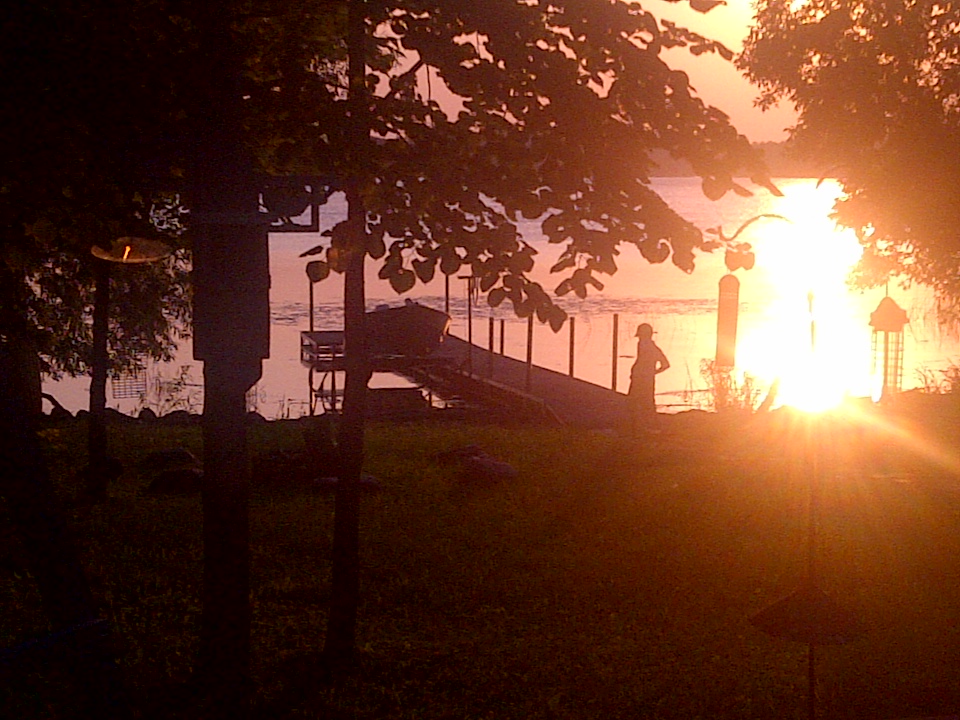
Sunset at the lake in Lake Park, MN

Sunset at the lake in Lake Park, MN

Learning to embrace that which we want to project, brings it home for healing. When we can do this we reclaim our power, reclaim our voice.

The other side of this is when we are the subject of projection.  It can be confusing when we are on the receiving end of projection.  It can appear in many ways from an angry outburst to a very logical rationalization of why we are portrayed as the antagonizer of the other person, why they somehow cannot do better, why they are stuck – because of something they believe we have done, somehow we have held them back – or so they want to believe.

One of the ways we can recognize projection is by the energetic impact that comes with it.  This energetic impact is often what creates the confusion within us, especially if we are new to the awareness of being projected upon.  For myself, I use to take it on, figuring there must be something wrong with me, something I could fix to make everything all right.  I gradually became aware that not all that was being projected onto me was mine. Then I needed to learn to discern what was mine to work on and what belonged to the person doing the projecting so I could let it go.  The mantra, “no one can create in my reality unless I let them” became a life affirming guide in the journey.

The fear was that what was projected on to me was my stranger in action, the stranger in me that I felt needed to be disarmed.  But the only way to disarm what we perceive to be the stranger is to embrace it. In the embracing of it we “take whole”, as my partner Jerry Nagel says in his work on World View, and we once again step into our power and our voice, inviting us into openheartedness in whole new ways.

The journey to open heartedness is not about being exposed in a way that is threatening or harmful.  It is about waking up and opening to the full range of emotional melody that resides within us—the full range, the rich textures of symphony that wants to make itself heard, not just a narrow range of notes played in isolation.  Through the journey to openheartedness, I am learning to live in and with vulnerability—not as weakness but as strength—and I am relying on emotions as a guidance system that is unfailing the more I learn how to use it.” ~ Embracing the Stranger in Me: A Journey to Openheartedness

My emotional guidance system will tell me when I am projecting, when I am being projected on, as I listen to it. It then is also a guide on what aspects of me, of the stranger in me, need to be embraced into wholeness of being.

Not Just Cover Design: Sacred Art

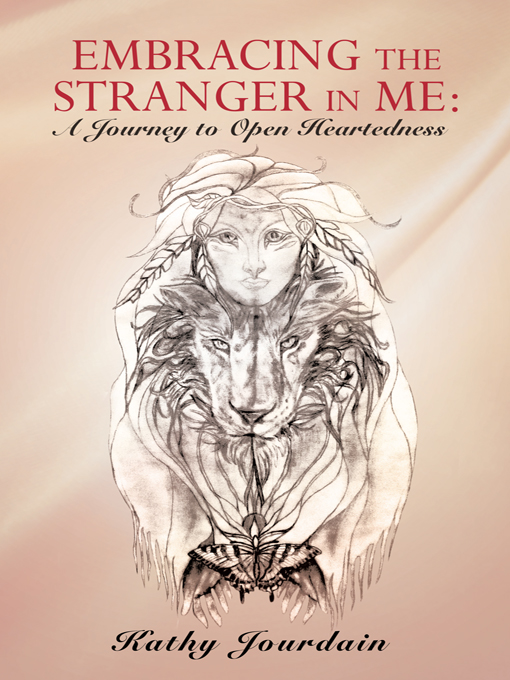
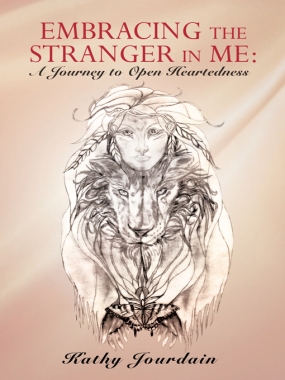
Like the book itself, the artwork on the cover of Embracing the Stranger in Me: A Journey to Openheartedenss, has a story of its own to tell.  It is a story of synchronicity and timing, one of flow, one of channeling and of ritual or initiation.  It is the story of two things, each percolating for years, each on their own.  The book, of course.  And the artwork. And not just any artwork – sacred art.  Sacred art for me and for the book.

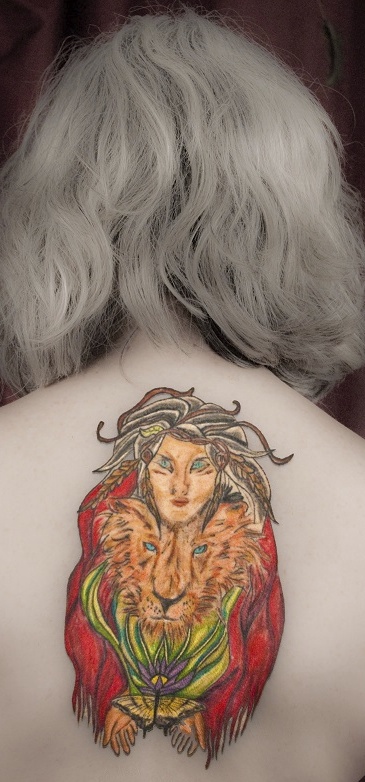
The genesis of the artwork was a long brewing curiosity and interest in possibly getting a tattoo.  Around 2009, when I felt the birthing of the second half of my life, I began to imagine getting a tattoo.  I didn’t know what image I wanted, nor did I know where on my body I would want to put this image.  At one point, my son’s girlfriend found a fabulous shamanic image of a woman and a power animal – which I bookmarked and then lost when I got a new computer.

When my interest in a tattoo renewed itself, I began searching the internet for images, knowing I wanted a lion as part of the image. Nothing ever emerged that resonated deeply for me or that I wanted to put on my body in permanent ink.  And then, early in 2013, at the same time my book was moving to its publishing phase, a Facebook friend began to blog about her journey to a sacred tattoo and I knew I was supposed to pay attention.

Through this friend, I got in touch with sacred tattoo artist Tania Marie.  The tattoo was to represent the spiritual dimension of my journey so I shared a couple of chapters from the book that reflected this journey as well as other reflections on what I felt the tattoo was to represent.  Tania meditated on me and my journey and began to channel the design.  What she channeled, before even reading what I sent her, was very consistent and resonant with what I shared.

Around the same time, the publisher started asking me about any ideas I might have for the design of the cover of my book. It was the first time I put the two things together.  Without even seeing the design, it occurred to me that the spiritual skin just might become the artwork for the book cover.   When I saw the artwork, I knew it was so.

Kathy Sacred Tattoo DesignArtwork by Tania Marie

There is much story contained in the elements of the art which embraces the elements of earth, fire, air, water and spirit and I will share some of it here, largely in the words Tania shared with me.

The medicine woman is in the process of shapeshifting into the lion who is my journey partner since my first drumming circle experience in 2000.  The medicine woman wears feathers of the eagle or owl in her hair, entwined twigs and leaves of Mother Earth, his mane and her hair and shawl all merging and integrating.

A lotus essence, almost like ethereal fire, emerges atop the swallowtail butterfly, with energy integrating into the lion’s mane, the medicine woman’s hair and shawl. The butterfly is releasing and freeing its creative abundance and joyful breadth of life-giving and is a messenger of powerfully transformative healing and regenerative energy and symbolism across time of the precious miracle of life, hope, love, transmutation, magick, joy,

The art is hugely rooted in shamanism, centeredness, balance, groundedness, empowerment, expansion, opening, releasing and honoring, as well as deepening emergence – all symbols and allies in deep journey and in transformation which is in continual motion.  Such a humbling experience to be offered this gift to be put at my back as a symbol of deeper healing, gifts, growth and protection.

Kathy 07 natural - Version 2

Photo by John Coleman and Michelle Murton


When it was time to have the tattoo inked on my skin, I went to see Kyle Bowles at Soul Harbour, the same tattoo artist that my friend had used.  It was done in two sessions, the first to do the outline, the second to do the colour.  Many people have asked me if it hurt.  It is hard to explain.  It is pain and not pain at the same time.  The only way I could think of it was as an initiation – like I might have gone through in a previous time, as the medicine woman depicted in the art, ritual, something that had to be done.

I love the colour version of the tattoo on my back – Kyle and I picked out the colours and it is even better than I imagined it would be.  And it was the black and white original art work that was to adorn the cover of the book.  I sent it off to the publisher and the design team there sent it back with the colour and shading that was just perfect for the book.

The interweaving of story, synchronicity, beauty, love and joy. A depiction of one aspect of the stranger in me showing up in the fullness of the openhearted journey.

9781452575728_COVER.indd

Welcome to Embracing the Stranger in Me: A Journey to Openheartedness

A memoir is a strange beast. It is an attempt to distill an individual’s life’s experiences and lessons in story form with the hope that in the storytelling someone else sees a thread that resonates with their own life journey, that some inspiration arises or, at the very least, it is viewed as something worth reading.

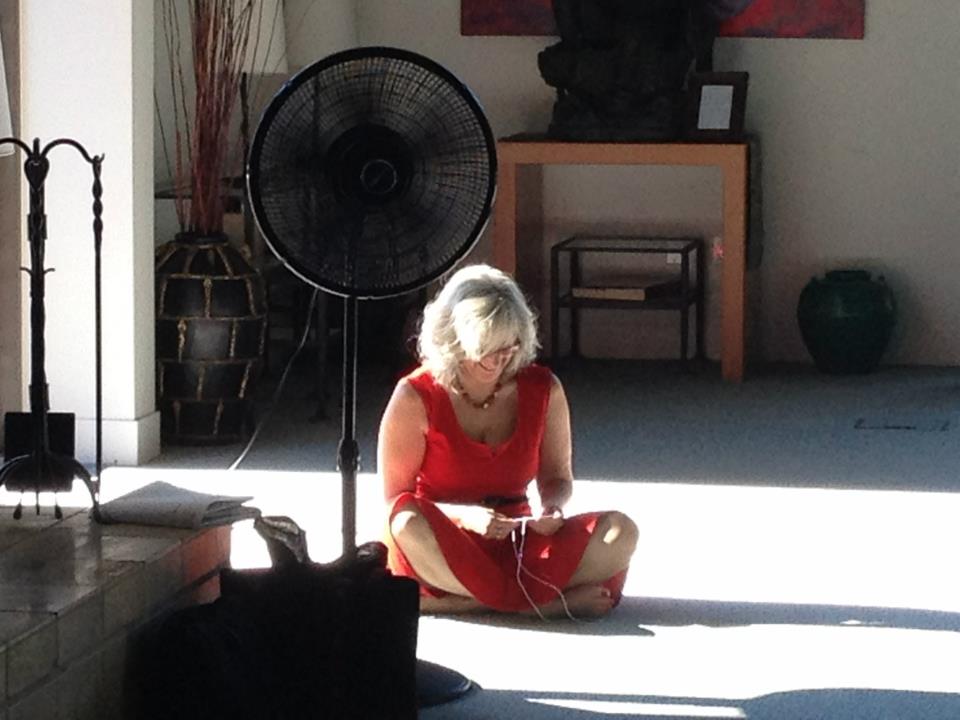
CA red dress Day 1My good friend Christina Baldwin is known to say, “The shortest distance between two people is a story.”  My book, Embracing the Stranger in Me: A Journey to Openheartedness, is full of stories.  I am tempted to say by way of humour, “And some of them might even be true.”

When I found out I was adopted at the age of forty-six I learned that many stories I had been telling myself about myself and my life, that helped me making sense of my life and its journey, turned out not to be true.  They were small stories; like why I was shorter than all my immediate family members, why my hair turned grey at a young age, where I was born. It gave me pause. In discovering I was adopted, everything had changed.  And, yet, nothing had changed. It made me wonder what other stories I was telling myself about myself and my life that also might not be “true”.

Abraham-Hicks says the biggest disservice we do to ourselves is in telling “the truth” over and over again, keeping alive the stories we wish would go away, the ones we don’t like living into but which we continue to tell simply because “it is the reality of our situation”.  If we want to change our situation, we must tell a different story.  When we tell it often enough, it can shift the shape of our life, eventually becoming true since our minds do not know the difference between what is real and what is imagined.  This is why Napoleon Hill in his seminal work, Think and Grow Rich, said, “Thoughts are things.”  But it is a tough thing to grasp when many of us are attached to the suffering of our stories rather than the joy of them, to the human tragedy experience rather than the soul journey perspective.

I have been imagining myself as a writer and an author since high school when I enrolled in a journalism correspondence course (which I never fully completed), imagining I would enter a career of journalism (didn’t happen) and when I chose to write a novelette in my final year of high school for my English class instead of doing all the other assignments (the novelette did get completed and I still have it).

The first time I created a vision board for myself back in 1998, the first image that came to my mind unbidden was that of a podium, partly because I imagined myself as a motivational speaker and partly because there was something in me that just knew I had stories to share that maybe other people would resonate with.

The early gestation of my book was back then too and some of what is contained in the book was originally written a decade or more ago.  It is with a little bit of disbelief that I hold my first book in my hand, with copies already sold, readers already saying the most beautiful, heartwarming things about it, ready to send it further out on its own path into the world.

Stories and life journey do not happen in isolation. I am aware that these are my reflections, stories of specific moments in my life, moments that have intersected with others on the journey.  The way others have experienced these same intersections may be somewhat or vastly different than the way I have experienced them. Their experiences are their stories to tell but I would not be the person I am today without having crossed paths with these fellow journeyers, without having had the experiences that I did in relation to them, good, bad or otherwise.  For each and all of them I am grateful.

I share my stories as a way to dive into the deeper patterns that shape life, relationships, healing, and journeys. Even as I re-read and edited them, they moved me—sometimes to laughter, sometimes to tears. Even though I have spent a lot of time unearthing and living with these stories, some of them still have the capacity to delight and surprise me. My hope is that they do the same for you, that along the way you find your own intersection points with your story – or, at the very least, you enjoy stories of someone else’s experience – believable or not.

I imagine this blog will capture many of the soul journey stories, hosting self stories that used to all reside under the Shape Shift blog and that there I will continue to write about what I’m learning through the Art of Hosting work and world that is so much a part of my life and experience. Sometimes a post will show up in both places when it seems relevant.

I would also invite you to check out the Embracing the Stranger in Me Facebook page where I am already seeing a community of support and inspiration arise, fuelled by all who interact with it; as well as the Twitter page for the book.  And I would also love to see your comments here.

Thank you for intersecting with my journey now.  May you immerse yourself in the book or the blog or both and may your path rise up to meet you as you journey well.