Identity – Reconnecting to Who We at our Core

I’ve been doing a lot of thinking about identity lately – sparked, in part, to recently having a First Person Account published by CBC titled “I had a loving family. My life changed at 46 when my birth sister revealed I was adopted. My parents hid my adoption. But somehow, the truth brought us closer.”

I’ve been doing a series of videos over at the Inner Wisdom Lab Youtube channel where I speak to various aspects of identity and offer a few guided visualizations for anyone looking to connect more deeply to their own core essence. And there are more to come.

I have now known about being adopted for 17 years, which seems a bit incredulous. Finding out sparked an identity expansion in some ways. In a moment, everything changed, yet nothing changed – with respect to my life, my immediate family and my sense of identity.

Identity and Core Essence

In thinking about identity, I am curious about what is underneath personality traits, skills, abilities, life events … and, I have arrived at core essence. The most basic and important attribute of self that provides a sense of who we are, the inner foundation of being. This essence is constant. In this 7 minute video, I speak about core essence or identity and, in this 10 minute one, I offer a guided visualization for anyone wishing to connect with their own sense of identity or core essence.

Identity and Roles

Sometimes we know and sense our core essence with absolute clarity. Other times it is obscured by layers and layers of roles, expectations – our own and others, doubt, hubris, the minutia of life, disappointments and external successes collected over the course of a life journey. We learn to not trust ourselves, our own inner knowing or wisdom or what our highest self whispers to us along the way. I speak about identity and roles in this 12 minute video and offer a 20 minute guided visualization for any wishing to review the timeline of their life, the roles they took on or were thrust upon them, the gifts in the roles and the opportunity to choose to more fully inhabit some roles and shed others that no longer serve.

DNA and Chosen Family Lineages

Perhaps not surprisingly, over the last 17 years I have also thought about lineage – a lot. DNA and chosen family lineage. DNA does not necessarily a family make. As someone who has been adopted, I feel both of these lineages strongly. I imagine there might be others who feel this way – rooted in at least 2 lineages, if not more.

I have felt most closely connected to my chosen family lineage. One could argue that they chose me since I was a baby at the time. But, if you believe in soul choices and choices made before incarnating, then we chose each other. This is the lineage I grew up with and claimed as my own, since I knew no other until I found out I was adopted. It is very much a part of my sense of self. For a long time, my biological lineage felt abstract.

In more recent times, having connected with a biological cousin who shared the gift of all the genealogical research she has done on my birth mother’s side of the family, something shifted. My sister and I knew that our birth mother’s mother (our grandmother) had had multiple children with different fathers. Our understanding was she had given all the babies up.

I had no idea how many blanks were actually there until that knowledge was shared with me. My birth grandmother had eight children with five different fathers and had not, in fact, given them all up – only the first two, one of which was my birth mother, the second child, raised by an aunt and uncle. Now I have my birth grandmother’s name, and the names of her parents, children, and their fathers, as well as information about the relationships. Having knowledge of my genealogy brings a sense of balance and wholeness I did not expect even as I do not feel a need to connect with all the names that are now etched in my birth lineage.

Identity and Place or Geography

Place and geography influence and shape our sense of identity – where we grew up, where we live, other places that have had a significant influence on our own sense of self. Interestingly, this can expand beyond our own experience to include places that family members are from. I very much have a sense of French Quebec heritage through my dad and of Newfoundland heritage through my mother’s mother (yes I mean the family I grew up in for any who wonder).

My partner, Jerry, is strongly influenced by growing up in the US mid-west. He refers to himself as a flatlander who does not like edges. I, on the other hand, grew up on the coast in a fishing town. People in my family were said to have had the “sea in their blood”. I muse on the influence of place and geography in this 9 minute video and invite people who listen to reflect on what parts of their identity have been shaped by where they grew up or where they live.

Is Finding Your Birth Family a Good Idea?

I am sometimes asked, is searching for your birth family a good idea? One the one hand, it is hard for me to say since this decision was not in my hands. But it reminds me of the famous quote from Shakespeare’s Hamlet – “to be or not to be” – although I am not entirely sure way. Searching for birth family is very much an individual choice. Not everyone wants to search, not everyone wants to be found, not everyone connects in relationship and not every story has a happy ending.

Having said that, if you are someone who knows you have biological family out there and are wondering whether it is a good idea, be aware of the expectations and hopes that you carry, and know that for some, it does not or will not answer the questions they are carrying. This can be hugely disappointing.

On the other hand, actually meeting people may not even be necessary to receive answers – like having my birth family tree suddenly fleshed out. And, for many, there are solid relationships that emerge and evolve over time. For my full sister and I, it is almost as if the 40 year gap did not exist.

On the whole though, there is an invitation to embrace your identity – all of it. And in so doing, remembering what was here before the physical body and after it is gone. It is all essence.

Belonging in Family as an Adoptee

I was in my mid-forties when I found out I was adopted. Except for when I was a teenager and wished I was adopted (who doesn’t?), I had no clue. I used to think it was a big secret that almost nobody knew but have discovered it was an unintentional conspiracy – so many people knew but nobody talked about it as if it was an unimportant detail. And, maybe it was. Until it became important. Important enough for my birth sisters to seek me out. Then the adventure of coming to terms with the fact there was a birth family different from my family – the family I grew up in – began.

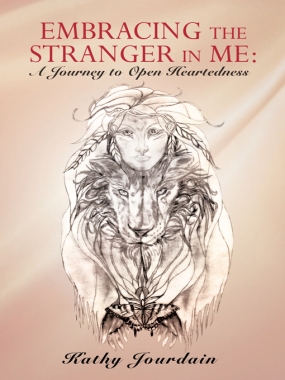
A new friend and colleague of mine, who also has an adoption story, recently began reading my book Embracing the Stranger in Me: A Journey to openheartedness. She sent me a note when she finished reading Chapter 8, the story of my birth mother, her disappearance as she ran away and her inability to acknowledge my sister (or me) as her daughter even when they met up again thirty years later. My friend, who has known forever that she was adopted and has also reconnected with her birth family, wrote to me to share her response, about how angry she was at my birth mother for this lack of acknowledgement. We unexpectedly opened a conversation about belonging, particularly about belonging in families.

Where do you belong when you are born to one set of parents and grow up with another? And how do you know where you belong? Does it even matter? Even if you don’t know you are adopted or that there are family secrets, the patterns of disruption play themselves out in your life in one way or another. That is what this question of belonging got me thinking about.

slide1What does it even mean to belong or have a sense of belonging? We know it is fundamentally important to a healthy society and healthy individuals – the people feel like they have a sense of belonging, a sense of having been accepted in a community, as part of a group that might also be family. It is a human need, important in seeing value in life and in coping with intense human experiences.


Belonging are the people you fit with, who you do not need to explain yourself to, who do not carry huge and unrealistic expectations of you or who you are or what you can or cannot fix by virtue of being you.

An opposite of belonging, for me, is abandonment. It shows up in my language and the language of many people who have an adoption story. “Given up, given away.” I carry threads of abandonment I didn’t know I had – my birth mother fled, my birth father and grandparents gave me up, even my sister left me behind. Granted, she was only three years old and could not operate with conscious intentionality. Later, my mother “abandoned” me too, in a way, through her journey with dementia.

The fact that decisions may have been a good and even wise does not matter to the cellular memory and sense of worth that is fuelled by memories not in conscious awareness. When I was working with an amazing coach during the period of this discovery – which I did not consciously go searching for but which found me – the journey and the coach, she listened to my language and then offered that part of our work together was for me to learn to adopt myself. It resonated.

My personal journey, once awakened to it, has always had a depth of self growth, self awareness and spiritual awakening. This part was natural to me (I was going to write easy but it was not easy and still has moments that are not easy or fun).

What was and still is more interesting in the journey related to my adoption and my birth family is that I still feel a bit dissociated from this part of my story. Intellectually I know it to be true. I have enjoyed meeting every person I am connected to and I have not met them all nor will I likely meet them all nor do I have a desire to meet them all and nor is it necessary – to me or them.

Knowing I am adopted expands my story of who I know myself to be but it doesn’t change the fundamental core of who I am. I am not more because I know more. I am not less because I didn’t know it before.

I have a relationship with my birth parents even though they have both passed on. I never did meet my birth mother as her death was the impetus for my sisters to find me. I did meet my birth father and his wife. I believe my birth parents had a soul contract to bring me into this world and then let me go and that they had this contract with my parents. I do not know the significance of this “departure” at birth but I do know that I feel I have multiple lineages – from by birth family and from my family I grew up in. While answers to some questions do not flow so easily anymore – where were you born? What is your ancestry? – I do feel connected to all the lineages.

I find my birth parents from time to time in the spirit world, just as I find my mother and other guides. Sometimes they appear unexpectedly in my meditation or in whatever query I am in at the time and sometimes I call upon them for help and understanding on whatever I am working through in the moment. It feels right.

And despite soul journey understanding, “One part climbs toward heaven, one sinks to earth, leaving me not really belonging to either.”

The Passing of an Era

It was the end of January 2008. I was driving down the highway on my way from Halifax to Yarmouth, Nova Scotia on a beautiful sunny winter’s day. I wasn’t just on a road trip for the day, I was on a journey to another era – a past I knew very little about, to visit a man I knew very little about. I was on my way to meet Fred Hanson. A few brief weeks before this I had found out he existed, that he was my birth father, that I had a birth family of which I had had no conscious awareness. Yet he – and the whole family – knew about me for all of my life.

On Wednesday, October 21, 2015, Fred died with his wife Doris, her son Corey and my sister Debbie van Soest present, bringing to a close another chapter of my own life, the passing of an era.

Kathy (2 years old) and Deb (5 years old) visiting in 1964 at Nanny and Grampy Hanson's house in Digby

Kathy (2 years old) and Deb (5 years old) visiting in 1964 at Nanny and Grampy Hanson’s house in Digby

I did not know Fred well. Most of his life had been lived by the time I met him. There are three things that stand out. When he, at the age of twenty-three, and his little family – me as an infant and my sister as a three year old – were abandoned by my birth mother, he did what he could to make sure we were looked after. This meant uprooting us from Halifax to Digby NS where he had grown up and where his parents still lived. Because my grandmother was already ill with brain cancer and my grandfather was already well on his way to alcoholism, they searched for help. Help arrived in the form of my parents, Mary and Hector Jourdain, married a few years, living in Digby at the time and still childless. An agreement was reached for my parents to adopt me and for me to know my birth family. Which I did until my grandmother died when I was still very young. Fred knew where I was and for all the years my adoption was a secret (from me and my brother at any rate), he kept his word and he did not seek me out.

Fred and Kathy

Me and Fred – March 2008

The second thing that stands out is how nervous he was to meet and how welcoming when I walked in the door. He’d been pacing from the front window to the kitchen window to the door in anticipation of my arrival. The door was opened before I even had a chance to get out of the car. He hugged me and we found our way through the awkwardness of first meeting. He gave me pictures from when I was baby.

The third thing that stands out was his agreeing to let me interview him for my memoir: Embracing the Stranger in Me: A Journey to Openheartedness. As I asked him questions and took him back through memories he had not thought of for decades, he forgot for a moment that I was interviewing him. He reflected on the moment my birth mother left and his incomprehension, still all these years later, that she could leave two babies behind.

Doris and Fred 2006

Doris and Fred Hanson, 2006

Fred had a sociable side that enabled him to fit in many places – like the Red Knight in Yarmouth where he and Doris often when for a beer and to hang out with friends. And he had a sarcastic wit that made him a great sparring partner. I didn’t know his second wife who raised my sister Debbie and brought my half sister Robyn into the world. I did however have a chance to meet Doris and experience the warmth and hospitality of their beautiful home. They were together for 28 years.

I am blessed to have known him, filling in some blanks of life story for both him and me. There are many stories that will not be known and many that will not be written now. I do know his brother Bill, his parents and others greeted him as he passed over. My mother and my birth mother had a pact together with Fred and my dad that has gifted me with multiple lineages that are important and relevant to my own life journey and in many ways I am only at the beginning of that exploration. And for now, it is grieving and celebrating the passing of an era.

The Spaces in Between

I have a complex web of personal relationships, as many of us do. The constellations of relationship have grown more complex over the decades of my life. It began with the family I grew up in, my dad still alive and my brother living hours away in another province. I have two children from a first marriage who are now in their early twenties with long term girlfriends who also have families – near and far.  My third child, who is still a preteen, is from a second marriage. There are negotiations and navigations and scheduling conversations with the two fathers, more so with my youngest and especially around the holidays.

If that is not enough complexity, in the last decade, I found out I had a whole other family – a birth family. That has varying levels of relationship and its own complexity.

And I entered into a new personal relationship a few years ago that crosses an international boundary as well as the work-life boundary. And he has his own constellations of relationships with his mother, siblings, kids and grandkids. And none of that even begins to touch on friendships here, there and in places in between.

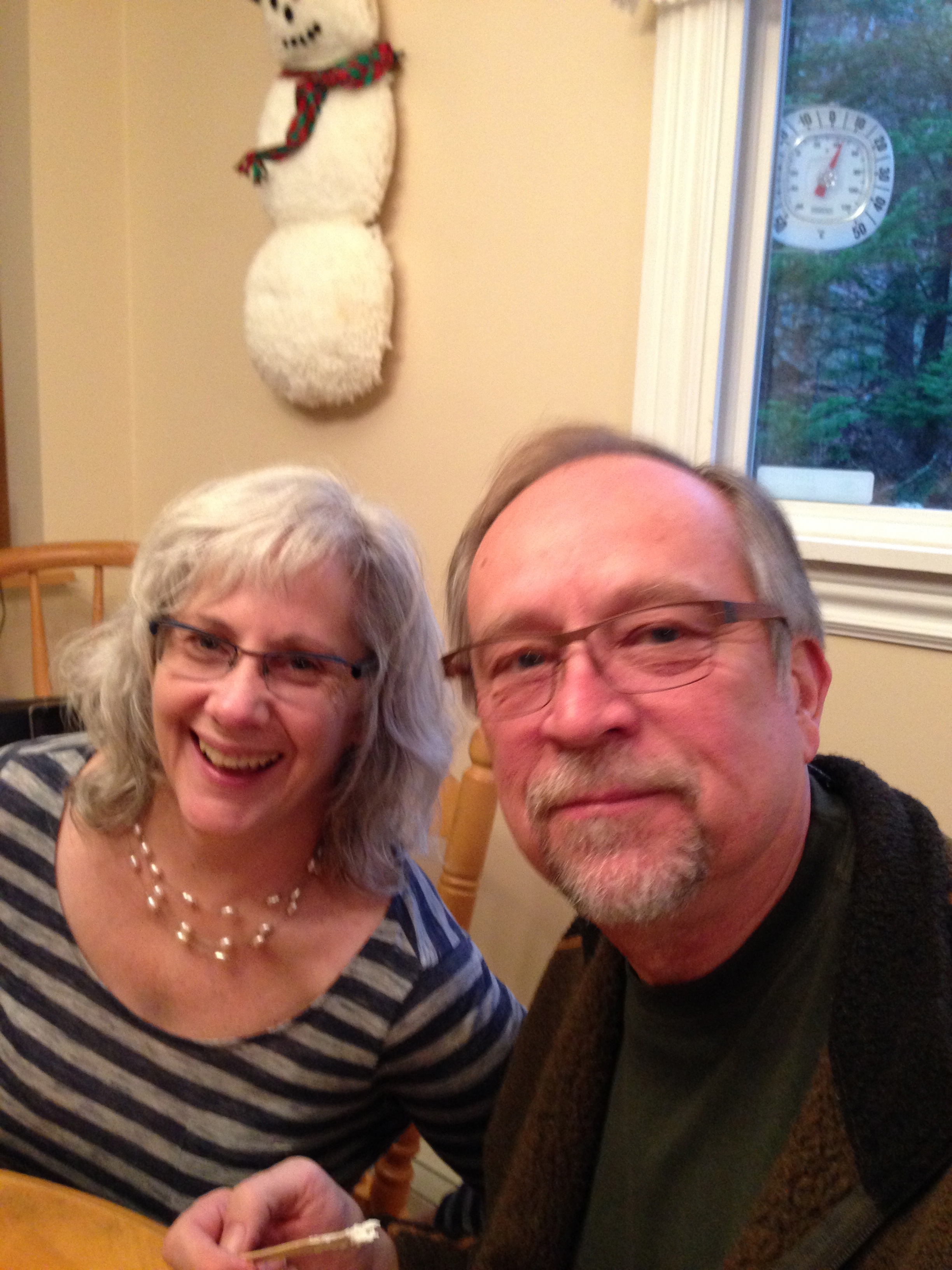
IMG_1120It is the space between Christmas and New Years. I am in an in between space too. This morning I drove to the airport twice – once to drop off my son who has been living with me so he can travel to visit with his girlfriend and her family for New Years. Once to take my beloved to the airport after having him here for Christmas, on his way home. I’ll visit there in a few days with my youngest for New Years.

And in this moment, I am in a space in between. The only person in my home today. A quiet day. A day of puttering – electronically and physically. A day that stretches in time. An in between day. In between Christmas and New Years. In between Christmas decorations and putting them away. In between 2014 and 2015. In between home and travel. In between a full house and an empty house. In between vision and manifestation.

I feel the fullness of the day. The fullness of the in between space. I miss my company. I miss the energy of a full house. I appreciate the quiet of the day. I experience the contrast of full and quiet. Of companionable and alone. I notice the in between space. How it feels. How I feel. Drawing breaths of the in between. Letting what was settle. Letting what is to come bubble up in anticipation. Letting this moment wash over me in the fullness of the beauty and challenge of the day.

The in between space. It is not a blank. It is full in its own way. Feeling the fullness of the in between spaces.