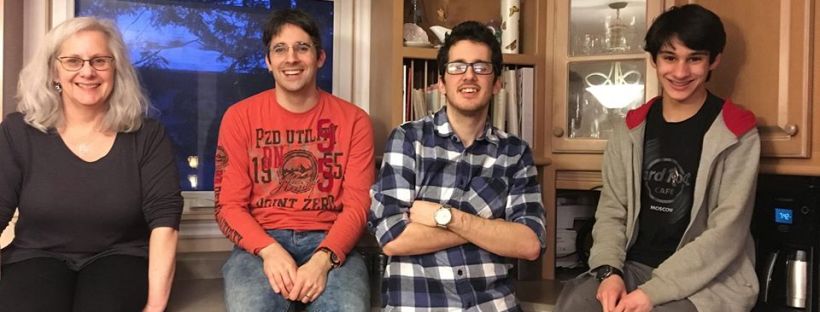
My brother and I are perplexed. How is it possible to be in your 40s and only then find out about a family secret that literally everyone knows – all our extended family, all friends of our family, my best friends growing up and an ex-boyfriend I have not talked to for 40 years? It seems, the only 2 people who did not know were me and my brother.
The secret? We did not know that I was adopted until my full sister and a half-sister reached out in 2008, when I was in my mid-forties. They sent me a Facebook message to say, “You don’t know us and we don’t mean to upset you, but we have reason to believe you might be our sister.” First thought? Who are you and what do you want with me?
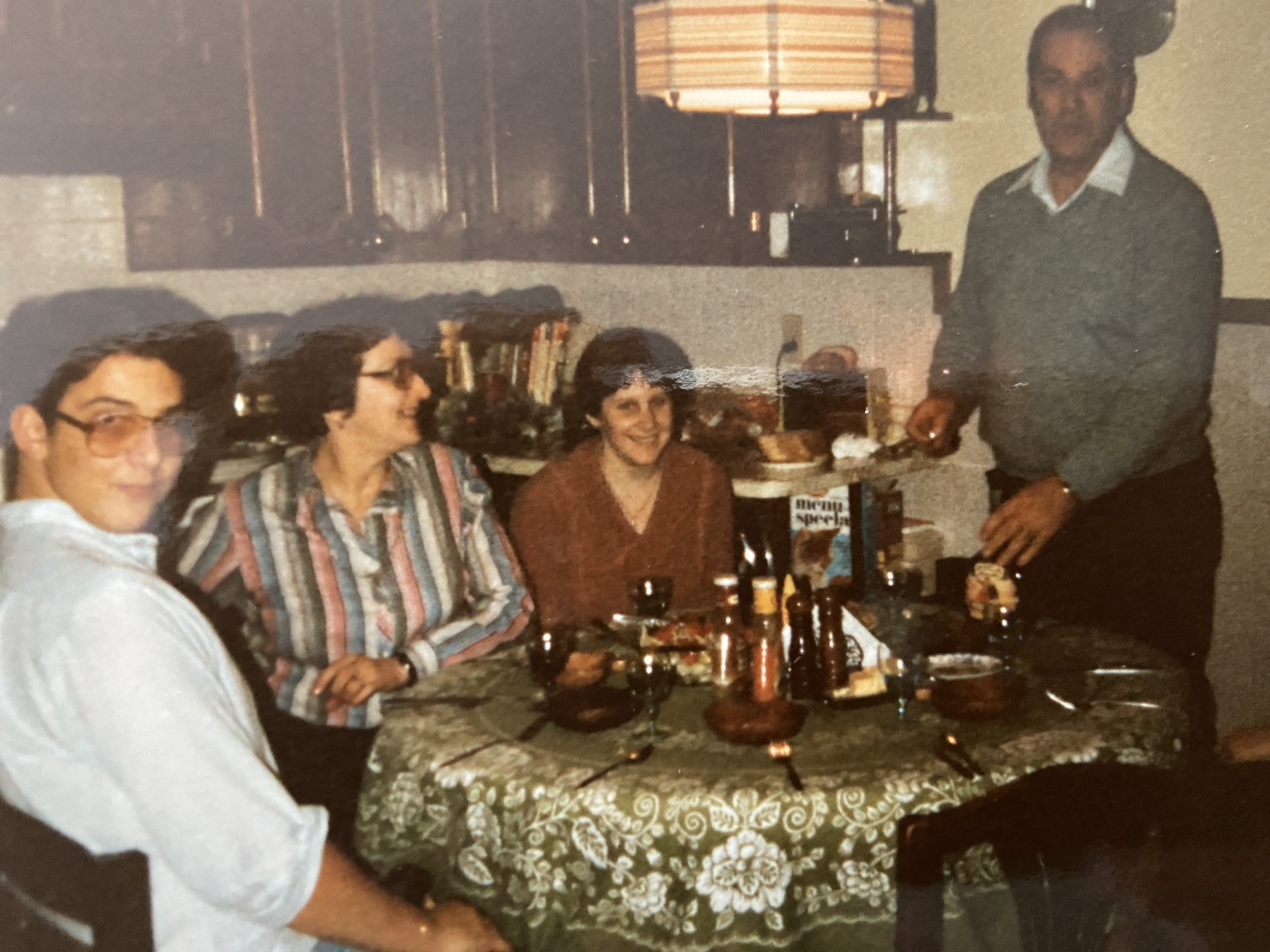
Immediately, I sent this message on to my brother. He has a sharp memory and can recall things I have no idea about. If this was true, surely he would know. He didn’t. He was just as shocked as me. (Also, for those who are wondering, he is the biological son of our parents, born a couple of years after I was in the picture.)
Our first thoughts were that this was an iron clad secret almost nobody knew – otherwise, how was it possible to keep such a secret for over 40 years? Also, it was in the 1960s and social media did not exist. Looking back now, I can see the reasoning was faulty – our parents adopted a child – of course they would have told everyone. So, that explains family and family friends knowing.
Soon after I learned this news, I met up with one of my best friends from high school. I mentioned a sister – thinking I would surprise her. Instead, she surprised me, “Oh, you know.” She had heard through a grapevine. When she asked her mother what she should do, her mother told her it was not her story to tell. True enough.
Then, I discovered some of our cousins knew – which meant all of our cousins knew. My brother and I are among the youngest.
A couple of years ago, a high school classmate died and a few of us gathered to remember him. It was a poignant time. We talked about people we grew up with – including who was adopted or otherwise had different family arrangements. My name was not mentioned in this conversation, nor was I or my situation referenced, nor did anyone ask me anything – even though we all openly knew the background of the people we talked about.
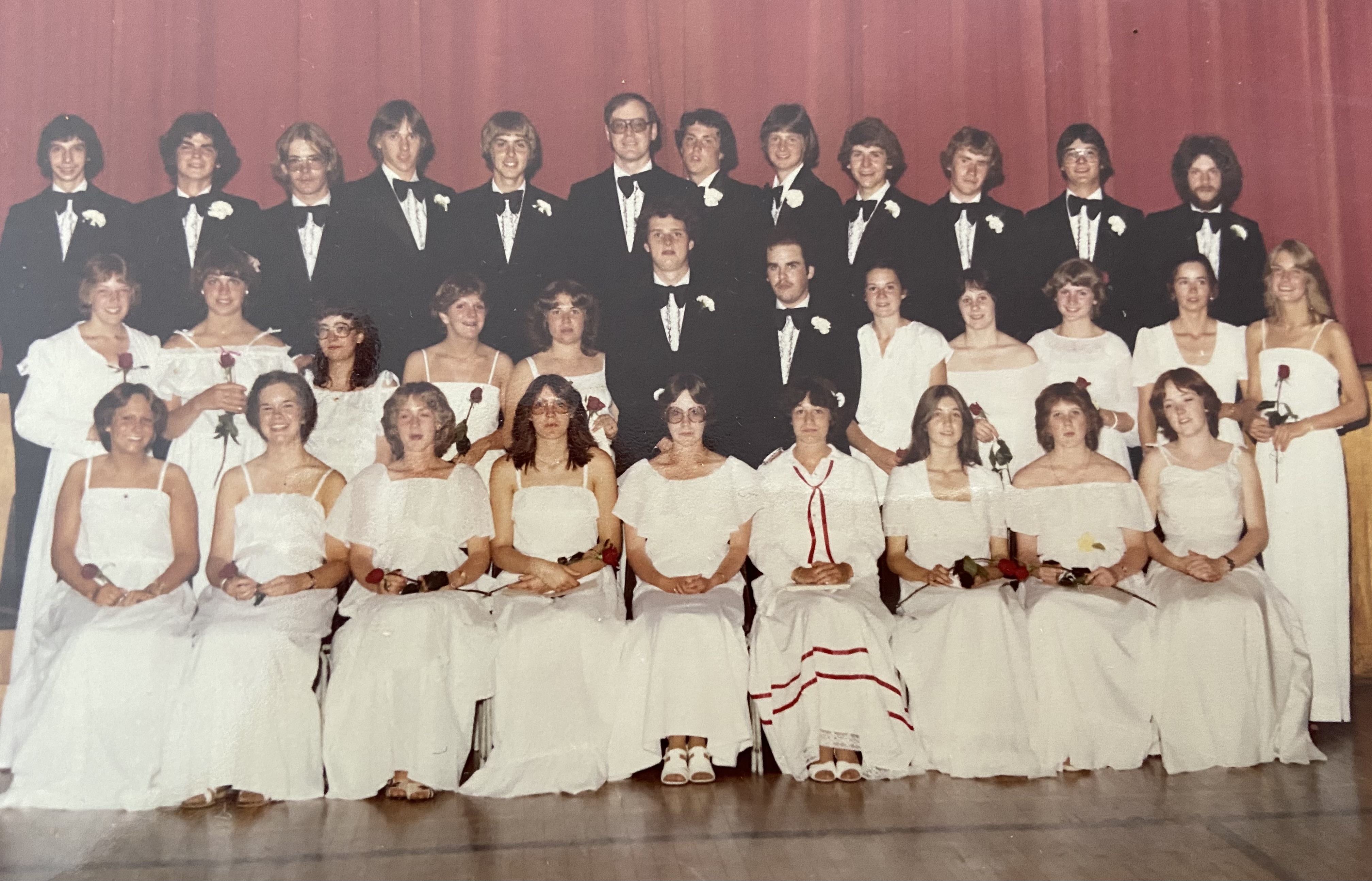
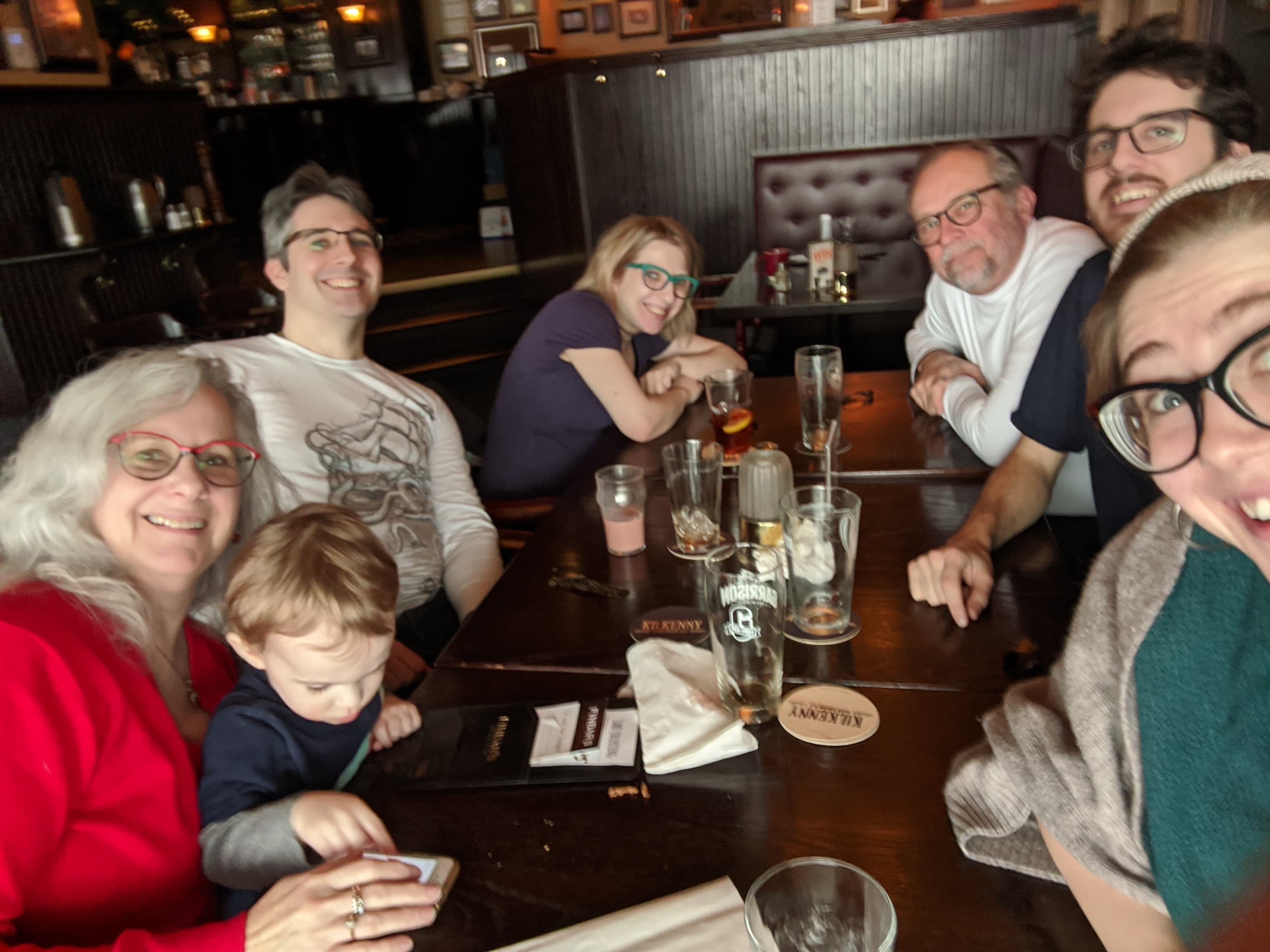
How many people in this photo knew I was adopted and never said a word?
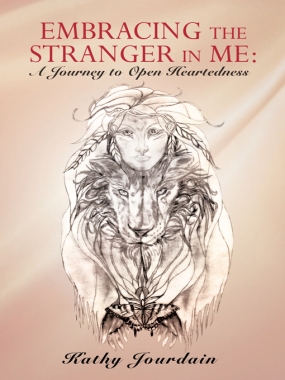
Later, one of the people there – also a good friend from high school – messaged me about my memoir: Embracing the Stranger in Me: A Journey to Openheartedness in which I write about the unfolding of my adoption story and meeting my birth family. In that exchange, she shared that she knew I was adopted while we were in high school together! Her mother had told her, but now her mother could not recollect how she knew.
I shared this information with my brother. Again, we were equally stunned that people we went to school with knew this about me and our family and it never, ever came up – not in casual conversation, not when talking about other people who were adopted and not in a moment of spite where someone might want to offend you.
This is top of mind at the moment because, recently through a strange kind of delightful serendipity, I reconnected with my high-school sweetheart, my first boyfriend – also, interestingly through FB. As we did the high-level overview of 40 years of life, I mentioned about being adopted. And, he said, he knew! He found out a couple of years after we broke up. The clincher in all of this. My father told his father. They worked together but were not really friends. How on earth did that conversation even come up? And, if my dad could tell my ex-boyfriend’s dad, why couldn’t he tell me? We’ll never know because they are both gone now. Just when you think you can’t be surprised anymore, something else comes to light.
So, it begs the question. How does a whole family and a town not expose a secret, even by accident? How does pretty much everyone we know from that time know about the adoption and it remained a secret to us? Our parents must have had moments of fear, wondering when I – or my brother – was going to come home with questions. Yet, year after year, through university, graduations, career changes, marriage, divorce, remarriage and 3 children of my own, the topic was never brought up.
When it finally did, my mother’s dementia was far enough advanced, it didn’t make sense to try to talk to her about it. Dad and I did have a good conversation – and several after that – and he was supportive of me meeting my birth family, also initially a little worried that this knowledge would affect our relationship. I told him we had 40+ years of relationship – we would be okay. And we were.
It’s a strange world we live in. I do believe secrets want to be revealed. I’m okay with how this story evolved – although it would have been nice to have known my sister earlier. I am curious what would have happened had I heard through one of my classmates – but it’s almost like everyone was sworn to secrecy.
You never know the life path. You never know what is coming up to be cleared anytime but particularly in what had been a very challenging year – 2025 – adding to a 9 in numerology which is a year of endings and clearings – leading into a 1 year – 2026 – for new beginnings, possibilities and opportunities. I have also just left a 9 year behind personally and entered a 1 year personally.
Dear 2026, please be kind, generous and abundant – for us all. I’m ready for it – even as I may never understand how my brother and I were at the heart of a family and town secret that everyone knew except us!




 I have also read the stories of so much
 Embracing the Stranger in Me