Identity – Reconnecting to Who We at our Core

I’ve been doing a lot of thinking about identity lately – sparked, in part, to recently having a First Person Account published by CBC titled “I had a loving family. My life changed at 46 when my birth sister revealed I was adopted. My parents hid my adoption. But somehow, the truth brought us closer.”

I’ve been doing a series of videos over at the Inner Wisdom Lab Youtube channel where I speak to various aspects of identity and offer a few guided visualizations for anyone looking to connect more deeply to their own core essence. And there are more to come.

I have now known about being adopted for 17 years, which seems a bit incredulous. Finding out sparked an identity expansion in some ways. In a moment, everything changed, yet nothing changed – with respect to my life, my immediate family and my sense of identity.

Identity and Core Essence

In thinking about identity, I am curious about what is underneath personality traits, skills, abilities, life events … and, I have arrived at core essence. The most basic and important attribute of self that provides a sense of who we are, the inner foundation of being. This essence is constant. In this 7 minute video, I speak about core essence or identity and, in this 10 minute one, I offer a guided visualization for anyone wishing to connect with their own sense of identity or core essence.

Identity and Roles

Sometimes we know and sense our core essence with absolute clarity. Other times it is obscured by layers and layers of roles, expectations – our own and others, doubt, hubris, the minutia of life, disappointments and external successes collected over the course of a life journey. We learn to not trust ourselves, our own inner knowing or wisdom or what our highest self whispers to us along the way. I speak about identity and roles in this 12 minute video and offer a 20 minute guided visualization for any wishing to review the timeline of their life, the roles they took on or were thrust upon them, the gifts in the roles and the opportunity to choose to more fully inhabit some roles and shed others that no longer serve.

DNA and Chosen Family Lineages

Perhaps not surprisingly, over the last 17 years I have also thought about lineage – a lot. DNA and chosen family lineage. DNA does not necessarily a family make. As someone who has been adopted, I feel both of these lineages strongly. I imagine there might be others who feel this way – rooted in at least 2 lineages, if not more.

I have felt most closely connected to my chosen family lineage. One could argue that they chose me since I was a baby at the time. But, if you believe in soul choices and choices made before incarnating, then we chose each other. This is the lineage I grew up with and claimed as my own, since I knew no other until I found out I was adopted. It is very much a part of my sense of self. For a long time, my biological lineage felt abstract.

In more recent times, having connected with a biological cousin who shared the gift of all the genealogical research she has done on my birth mother’s side of the family, something shifted. My sister and I knew that our birth mother’s mother (our grandmother) had had multiple children with different fathers. Our understanding was she had given all the babies up.

I had no idea how many blanks were actually there until that knowledge was shared with me. My birth grandmother had eight children with five different fathers and had not, in fact, given them all up – only the first two, one of which was my birth mother, the second child, raised by an aunt and uncle. Now I have my birth grandmother’s name, and the names of her parents, children, and their fathers, as well as information about the relationships. Having knowledge of my genealogy brings a sense of balance and wholeness I did not expect even as I do not feel a need to connect with all the names that are now etched in my birth lineage.

Identity and Place or Geography

Place and geography influence and shape our sense of identity – where we grew up, where we live, other places that have had a significant influence on our own sense of self. Interestingly, this can expand beyond our own experience to include places that family members are from. I very much have a sense of French Quebec heritage through my dad and of Newfoundland heritage through my mother’s mother (yes I mean the family I grew up in for any who wonder).

My partner, Jerry, is strongly influenced by growing up in the US mid-west. He refers to himself as a flatlander who does not like edges. I, on the other hand, grew up on the coast in a fishing town. People in my family were said to have had the “sea in their blood”. I muse on the influence of place and geography in this 9 minute video and invite people who listen to reflect on what parts of their identity have been shaped by where they grew up or where they live.

Is Finding Your Birth Family a Good Idea?

I am sometimes asked, is searching for your birth family a good idea? One the one hand, it is hard for me to say since this decision was not in my hands. But it reminds me of the famous quote from Shakespeare’s Hamlet – “to be or not to be” – although I am not entirely sure way. Searching for birth family is very much an individual choice. Not everyone wants to search, not everyone wants to be found, not everyone connects in relationship and not every story has a happy ending.

Having said that, if you are someone who knows you have biological family out there and are wondering whether it is a good idea, be aware of the expectations and hopes that you carry, and know that for some, it does not or will not answer the questions they are carrying. This can be hugely disappointing.

On the other hand, actually meeting people may not even be necessary to receive answers – like having my birth family tree suddenly fleshed out. And, for many, there are solid relationships that emerge and evolve over time. For my full sister and I, it is almost as if the 40 year gap did not exist.

On the whole though, there is an invitation to embrace your identity – all of it. And in so doing, remembering what was here before the physical body and after it is gone. It is all essence.

One-on-One Guided Visualizations – What They Are and How They Work

How do one-on-one guided visualizations work? Listen here or read below.

One-on-one guided visualizations start with your question or inquiry and, again, offers a story for you to connect to. With the one-on-one sessions, you are invited to share what imagery is coming up for you. As you do so, this creates the opportunity to influence the direction of the story and the questions offered to you – making your journey very specific to you. It means, you can go to a greater depth.

Once you have the symbols and the imagery, you will be able to connect to them long after the guided visualization is complete, continuing to tap into the gifts and inner wisdom that emerged for you during the guided journey. For many people this informs their day-to-day experiences as well as their access to their own intuition and inner guidance.

I am offering guided one-on-one visualizations – if you want to schedule a session with me you can find the link on this page. I would love to collaborate with you on a guided visualization that will help you access your inner wisdom and your inner healing power.

Accessing Your Inner Healing Power: Guided Visualizations

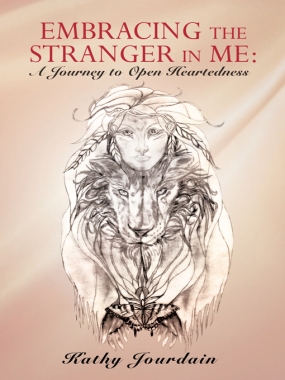
My memoir, Embracing the Stranger in Me: A Journey to Openheartedness, describes my spiritual and healing journey over the first half of my adult life. It was, by and large, a journey of accidental discoveries. Along the way, I tapped into my ability to “see” spirit guides and to offer deep and profound guided visualizations for others.

I have been considering this kind of one-on-one offering for a while now. Recently, I was inspired by one of Lee Harris’s energy updates where he spoke about Sacred Arts Rising and the impulse to share creations in a new and different way.

Embracing my spiritual identity more fully, I have decided to offer one-on-one guided visualizations with the possibility of adding on a follow-up call. We are living in times of significant shift, change and upheaval. Our best recourse for finding our way is to be grounded in who we are – embracing all of who we are. This offering is one resource to support you in this journey.

What

A 1.5 hour guided visualization where you have the opportunity to connect deeply with yourself or with your guides for any of the following purposes:

  • To access your power and discover ways to live into it more fully.
  • To access your hidden or forgotten talents and gifts.
  • To meet a past and/or future self for guidance, messages or gifts.
  • To meet your spirit guide(s)/power animal(s) and ask them for guidance, messages or gifts.

The Process

This is not me relaying information to you. This is a collaborative process where I provide structure through the visualization, you tune into what is emerging for you and we have a conversation to stay tuned into what is true in the moment.

Where

On zoom – a link will be shared for the session.

Follow Up Option

These are stand-alone sessions although some people like to do a follow-up to share what happened post the session and ask any questions that are lingering. This would be a 1 hour session.

Fee and Payment

$150 for the guided visualization session.

$225 for the guided visualization and the follow-up.

Payment can be made through e-transfer in Canada, sent to or through paypal from anywhere else, to the email kathy.jourdain@gmail.com. Sessions are not confirmed until payment is received.

Testimonials

“My guided visualization with Kathy connected me to my spirit guides, with vibrant imagery. I go back to this imagery over and over again for guidance and to tap into a revitalizing energy.”

“I gained valuable insights into patterns in my life that were holding me back and discovered gifts I forgot that I had that I now draw on regularly.”

“Kathy’s voice invites a journey, her questions provide great guidance in the experience and the inner resources that are illuminated offers profound insights into alternative pathways.”

Additional Resources – Journey and Visualization Recordings

What is a Guided Visualization? I speak about it in this post where you can also find a link to a 1 minute audio recording.

What happens in a one-on-one guided visualization? Access the post and short audio recording here.

What is a group guided visualization and how does it work? Access the post and the link to a short audio recording here.

In this post which includes a 7 minute voice recording, shortly after my memoir, Embracing the Stranger in Me: A Journey to Openheartedness was published, I talk about the Compelling Nature of the Journey – so much so that you have to respond to the call of life.

This journey for me was an opening to gifts and talents I did not think possible for me or available to me. I had imagined only “special”, “deeply gifted” and “powerful” people would have access to these kinds of gifts. The realization over time is that we all have access, we all have gifts. Most of us just need to find our way through the persistent story telling that tells us otherwise, that tells us that these experiences are not real, that we are making them up. The mind does not know the difference between what we imagine and what is real – which is why visualization is so powerful. Check out the post and 8 minute audio recording here.

Reflections on Generations and Heritage

One of two last remaining aunts on my father’s side of the family died in January and her celebration of life was planned for this past May Victoria Day long weekend. My brother and I quickly accepted the invitation to make the road trip to Cap Chat, Quebec to reunite with many of our French cousins.

Annual Pilgrimage

We remember well our annual, occasionally twice-yearly, trips to Quebec, to the homeland of our father, on the Gaspe Peninsula, St. Lawrence Seaway side, when we were young. Mom and dad would wake us up at 3:00 in the morning and bundle us into the back seat of the car, in the days before seatbelts, for the long drive. Back then it was in the range of 13 to 14 hours from Lunenburg to Cap Chat, on roads with no passing lanes, certainly no twinned highways and even a few dirt roads. Even today, once you get past Moncton, New Brunswick, no matter which route you take, the highways are not twinned, although from Halifax it is more like an 8-hour drive now.

When we did sleep, we would often wake in time for breakfast, disoriented in time and geography. There were a few places we predictably stopped – one a diner outside of Moncton and one a restaurant in Carleton, Quebec, neither of which exist today. Because we were on vacation, we could have clubhouse sandwiches, french fries and orange soda. A real treat.

We always looked forward to seeing our cousins – those who lived in Cap Chat and those from Rimouski or Montreal who happened to visit our grandparents at the same time we were there. Being among the youngest of the cousins though, there were many of the 20 or so I did not know from those travels. They were already off doing other things.

Traveling to Quebec every summer was not an option, it was an expectation. Dad was on a mission to get there and an even speedier mission to get home once the visit was over –  it could be a real nail biter! Initially 2 weeks at a time, then 10 days, then a week.

DNA Imprinting

Year over year, we did this pilgrimage and it seems imprinted into our DNA as much as the biological lineage for my brother (because spoiler alert for some, I was adopted and did not know it growing up …. or even until my mid-forties – but that is the stuff of other stories, including my memoir, Embracing the Stranger in Me: A Journey to Openheartedness). In our adult years, my brother and I traveled together to Quebec just a few times – all for funerals.

Upon our arrival, we were warmly welcomed and embraced. Some cousins I had not seen for decades – as many as 4 decades. Others I had met again in more recent years. Yet, no matter how many years have gone by, the connections are genuine and feel recent.

Walking along the sidewalk in Cap Chat – or on the beach – it was like it was yesterday when we stayed at our grandparents’ house, the same house dad and all his siblings grew up in. Each step resonated. On the beach, I could feel the connection with all who came before and are no longer physically with us – grandparents, parents, aunts, uncles, some cousins.

Cousin Relationships as Adults

Cousin relationships in adult years, and with the prevalence of social media, is far different than when we were shy children. We are grateful that pretty much everybody speaks English since we don’t speak French. Social media gives us a peek into people’s lives – travel, relationships, connections. It reminds us of who people are.

As someone not biologically connected to this family, it is interesting to observe the physical resemblances of siblings and cousins. Some have more unique characteristics, coming from their other sides of the family. Some cousins look like they could be siblings. There are, like in most families, very notable Jourdain characteristics. As a child and even young adult, I had no idea I didn’t look like the family. Now, although it is more obvious to me, my brain still “recognizes” me as a member of this family.

A curious side note: my brother and I both did not know I was adopted. When we found out, it seemed that it must have been a really big secret, because how could we not have known? Yet, everyone in the family, and pretty much everyone we grew up with in our small town, knew I was adopted. A secret so openly known, no one talked about it.

Generational Shifts

Generations in families shift over time. We move from childhood to adulthood, with a generation or two still ahead of us. Then, those generations are gone, and we are now the elders in the family. Most of us have families of our own for whom we are the oldest generation now, grandparents in our own right. It is good to have reminders of who our generation is in our extended family.

The generation before.

The last funeral I had attended in Quebec was with my father, also for an aunt. At that time, he was the last remaining of six siblings. My cousins who were there each acknowledged him with greetings, conversations and even a gift or two. There was a hospitality room where the family gathered to connect, have a few drinks with amazing food, and tell stories. My dad thought it was loud, that people drank a lot, that “it wasn’t the same anymore”. I told him the only thing that was different was the generations. I believe he was 85. The view from there was a bit lonely I’m sure, rooms filled with ghosts of memories from a different era, now filled with the next generation of adult children and their children.

Had my brother and I not gone to Quebec, I doubt I would have missed the experience. However, having gone, and now knowing what I would have missed, I am so much more likely to quickly accept the next invitation, which will inevitably come our way.

It is good to be reminded of who we are in the context of our heritage and shared memories or experiences. Our memories and our stories keeps the generations before us alive.

Maybe I’m a Queen

In an Open Space zoom meeting this past week, I was named two things: change maker and courageous; and I’m not sure how I feel about either of them. I didn’t originally register for the event because I didn’t identify as a change maker. It was only after reconnecting with my dear friend who called the session that I decided to attend. Not because of being a change maker but because of friendship and colleagueship. The check-in question was what is your biggest challenge as a change maker now? I was stymied. For a minute.

What Does it Mean to be a Change Maker?

Even as I said out loud that I wasn’t sure I identified as a change maker, it seemed absurd. Perhaps I was imagining change makers as something else. Maybe social entrepreneurs, somehow doing different things within and at the edges of our systems – communities, organizations, networks – than what I am  doing? Doing something more substantive than what I do? I couldn’t even voice that out loud because of the absurdity of it. Talk about needing to own and embrace an identity. If what Jerry and I are doing with Worldview Intelligence and all its various applications is not change making, then I really don’t know what is.

So, what am I dealing with as a change maker? Within myself and those I work with or host: grief, overwhelm, guilt are just a few things. Grief for all that goes on in the world, overwhelm for the enormity and complexity of it all, both near and far, and guilt when life goes on in relative peace and comfort while so much else is in chaos and uncertainty.

It is important to remember where our spheres of influence are and focus attention there. It is also important to participate in things that nourish us. Which is why I joined a session during that call on ‘communing with more than the human world’. This is where someone said I was courageous and, interestingly, that carried back into the full plenary.

A Drumming Circle, Vision and Journey

I shared the story about the first drumming circle I ever participated in, talked about the vision with the shape shifting journey lion where we flew over fields of wild flowers, then trees, then mountains. On the other side of the mountains, there were people singing and dancing around a huge, celebratory bonfire. I shape shifted into the lion as we landed and joined in the celebration, welcomed home by the ancestors.

Home Base in Gold Lake – 2009

A decade later, I was in Gold Lake, Colorado, inexplicably drawn there to be with friends who were hosting an Art of Hosting training for financial planners. One of my friends said she was going to do a day long vision quest on the land following the training and the reason I felt called to Gold Lake was to do it with her. (I did, and that is a whole other story.) When I arrived at the Gold Lake Resort and started walking the dirt roadways and pathways, I could hear, in my mind, body and soul, a drum beat. It got louder with each passing hour and suddenly I realized, this land I was walking on was the land I had flown over in my vision a decade earlier and I never even knew it existed. I still get goosebumps thinking and writing about it.

This spiritual part of my identity I do own and embrace. I have pretty consistent meditation and “magic” practices. I don’t know how I would have gotten through the last four years without them. They support me in being a conscious, active participant in my own life. But courage is another thing. Is it courageous to share this part of my life with others? In this case, I was in the safest kind of space possible.

Of course, I did write and publish my memoir, Embracing the Stranger in Me: A Journey to Openheartedness. Ironically, when I describe the book to people, I almost forget to mention it is about my spiritual journey. I talk about finding out I was adopted, marriage and divorce times two, job loss and starting a consulting business, my mother’s journey with dementia, long-term care and her death, and my father’s health challenges, particularly not waking up for almost 2 weeks after his second open heart surgery. All of these things are indicators and part of my spiritual journey.

What Does it Mean to be Courageous?

So, what does courage mean? What does it mean to be courageous? Definitions of courage describe it as “facing danger”. There is perhaps a perception of facing danger by sharing stories, deemed deeply personal. But danger to what? Reputation? Professionalism? Career?

The word courage is derived from the old French word corage, meaning heart and innermost feelings. I can identify with that more than with facing danger. I can and do bring heart to everything I do, whether writing, hosting or being in relationship with others. I can accept that as an identity. Heart changes spaces, dynamics and energy fields. It welcomes people, contributes to safe spaces and can positively impact someone’s day, sometimes just by being in the same space and sometimes just in passing by another person.

Everyone can be Courageous, Have Heart

Everyone can be courageous, can have heart. It doesn’t have to be loudly proclaimed, it can just be what we embody. I think it takes a pretty special person to be able to do this all the time. I know I can’t. Some days the stress of things, of worry or concern, in my life is too great. Those days I have to dig deep, sometimes just to get through them. Other days I can radiate heart. This is why practices are so important. They help tether us to what is most important in our lives.

In some ways, the terms are irrelevant. What does it take to show up fully and to embrace all that we are? Being present. Communing with nature. Seeing the beauty all around us. Allowing ourselves to feel. Giving permission to self to live into the things that bring joy, even with all that goes on the world, near and far.

Embracing My Power, Brazil, circa 2012

“Maybe I’m a Queen”

I am reminded of this William Stafford poem that a dear friend shared with me in the months after finding out I was adopted, as the question flowed into my mind: Who are you, really? Maybe, I’m a Queen. It spoke to me then, it speaks to me now. Enjoy.

A Story That Could be True

By William Stafford

If you were exchanged in the cradle and
your real mother died
without ever telling the story
then no one knows your name,
and somewhere in the world
your father is lost and needs you
but you are far away.

He can never find
how true you are, how ready.


When the great wind comes
and the robberies of the rain
you stand on the corner shivering.

The people who go by —
you wonder at their calm.

They miss the whisper that runs
any day in your mind,
“Who are you really, wanderer?” —
and the answer you have to give
no matter how dark and cold
the world around you is:
“Maybe I’m a queen.”

An Antidote to Sadness is Tears

The power of tears is highly underrated. We have been taught to hide our tears (at least in my generation) and to apologize for them when they do show up. We’ve all heard it when someone tries to speak through their tears. Like expressing the emotions signified by tears is weakness. Or, as a life coach told me a long time ago now, “Kathy, you think your emotions make you weak.” She assured me there was strength in acknowledging my own emotional experiences and working with them. She was right.

Tears are an antidote to sadness, also sorrow, stress and many more of the emotions that sometimes feel like they will overwhelm. Tears release oxytocin and endorphins. These feel-good chemicals can help ease both physical and emotional pain. This can provide a sense of calm or wellbeing.

Allow your tears to flow. Even when with others. Stop apologizing if/when it happens. It is the most natural thing in the world and so healing.

#NeuroChemicals
#emotionsareyourguidancesystem
#emotionalexperience
#copingskills
#copingstrategies
#noapologyneeded

Dad Would Have Been 90 Today – A Goal He Could Not Achieve

My father had 2 goals in the latter years of his life. Live to be 90 and live out his days on his own in his house. There was never any question that he would go anywhere else. Unfortunately, those 2 goals turned out to be mutually exclusive. His health and mobility deteriorated to the point where even he could see he would no longer be able to live in his house. He died January 16, 2020, with all his faculties still intact. He was in hospital and knew he was dying. At one point on that day he said, “I’m on my way out.” Today would have been his 90th birthday.

There is so much I could say about him, and have said about him in previous blog posts. Dad must have marvelled that he lived as long as he did, given the health issues he had for most of his life. He had a strong will to live and he was stubbornly determined. I love how he adjusted his expectations of what he could do to keep pace with the slow down of his body. He was resourceful and created many workarounds to be able to continue to do the things he wanted to do and loved to do.

It’s been 3 years and it feels like yesterday. I think about him and my mother almost every day and they both come to me regularly in my dreams. I am grateful for the deepening of our relationship over the last decade or two of dad’s life. I am grateful he got to know and become friends with my partner, Jerry. I am grateful he did not have to live through the chaos of the last three years. I think it would have devastated him.

I know how proud he was of me and I think about my own struggles in life and building a business, how challenging the last few years have been. I always I hope that I can live up to my father’s sense of pride in me, his hopes and expectations for me and my life. He continues to guide me and inspire me, both through what I have learned through his “mistakes” or struggles in life and what I have learned through his accomplishments. As my family constellations continue to expand in unexpected ways, I am grateful he and mom took me in as a baby and for his words, “It was love at first sight.”

He loved his grandchildren and always enjoyed spending time with them – even as he wished it was more time.

In the end there is only love, although in many ways, the story never ends.

Dad with Spencer and Jacob in 1993 on his prized Bluefin. Dad loved his grandsons.

A Radical Thought About Forgiveness

My radical thought about healing is that we can release ourselves from the hold and from the impact of the harm others have done to us without necessarily having to forgive them. This is an evolution of my thinking about forgiveness and counter to much of the prevailing thought about it. Hear me out.

In the new book I am writing, Accessing Your Healing Power Within, there is a chapter dedicated to forgiveness. I start the chapter with a quote from Martin Luther King, Jr.: “We must develop and maintain the capacity to forgive. He who is devoid of the power to forgive is devoid of the power to love. There is some good in the worst of us and some evil in the best of us. When we discover this, we are less prone to hate our enemies.”

I completely agree with this quote. I would say it is about touching into our humanity to see the humanity in someone else and to not get lost in our own hate of another. I have thought about the topic of forgiveness a lot over the years, having experienced intense, sustained emotional and psychological trauma by someone who was in my life for quite awhile.

In psychology, forgiveness is generally defined as “a conscious, deliberate decision to release feelings of resentment or vengeance toward a person or group who has harmed you, regardless of whether they actually deserve your forgiveness.” This is followed by the caveat that forgiveness does not mean forgetting, nor does it mean condoning or excusing offences.

In thinking about the person who did harm to me, who had power over me and some of my emotional experiences for far too long for reasons I will not get into here, recently I have been asking myself, “Have I forgiven them?” This person no longer has a hold on me, no longer impacts my emotional experience, no longer has the ability to take power from me and I no longer give away my power to them. I don’t hate them, I don’t feel resentment nor do I feel a need for vengeance. But, when I sense into the question, “Have I forgiven them?” the answer keeps coming back as no. Which I find fascinating and which has sparked this deeper inquiry. Will I forgive them eventually? It is doubtful and I am realizing it is okay.  That person not only harmed me, they harmed other people I love and continue to do harm to others. This will likely until the day they die.

IMG_3420

New growth comes out of the hardest spots.

A person I love deeply is currently in the grips of someone who is doing my person harm. Eventually, I trust that my loved one will find it in themselves to become free from this situation. I choose to believe this and that is another story. Will I forgive the person who is doing the harm? I understand where they are coming from. I understand the background. I can have empathy for why they act the way they do. But will I forgive them for the harm they are doing to my loved one and, by extension, to a network of loved ones? What about the harm they are likely to inflict on others over time, even once my loved one finds a different path? I am doubtful I will forgive that person for the havoc they have wreaked. Unless they are able to change their ways, how they treat others is unforgivable.

There are many people, acts and behaviours I can, have and will forgive. I get that true forgiveness does not condone behaviour. I get that we forgive for ourselves, not the other person. But really what we are striving for is to be released from the emotional hold that another person, their actions or behaviours has or has had on us. My radical thought is, we can release ourselves from that hold and from the impact of the hurt without necessarily forgiving. And I think that might be okay. Maybe this is what people mean when they talk about forgiveness. Maybe we need another word for this.

In the book I write, “You cannot wear your forgiveness for someone else as a badge of honour. Forgiveness is an act of humility. And, in my experience, especially in the most challenging of situations, it is one of the most difficult things to do and also one of the most freeing.” I still think this is true in many ways. And, I am now expanding and reframing my thinking. We can heal without forgiving the most atrocious things that have been done to us. We can become free through healing that does not have to include, or preclude, forgiveness of others.

Which leaves me with another question. Can we heal without self-forgiveness? And my initial response is that we need self-forgiveness, like self-compassion and self-love to truly access our healing power within

Does Your Family Have a Collective Trauma Worth Healing?

Doesn’t every family have some degree of trauma in it; that perhaps ranges from somewhat mild to severe? This is a question I’ve been reflecting on these last few weeks for a variety of reasons, including wondering how a family experiences trauma individually and collectively and how, when it makes sense, a family can engage healing in its system?

When a family experiences the same trauma circumstances – an event or a long-standing relationship where trauma has been inflicted – each member of that family experiences the trauma differently. When removed from the trauma, the trauma lives on in each of us, in our cellular memory, in our minds and imaginations, continuing to affect each of us, each in our own way and collectively too. There is some shared aspect of the trauma, but the way we each remember our experience will have its own flavour, its own story, its own influence. What this looks and feels like can depend on your role in the family, in and with the trauma, your age and other factors too.

The family system that is interested in healing can explore the impact of trauma as they collectively experienced some element of it. That part can feel easy because it seems like everyone is in agreement. However, it becomes more challenging for family members to completely coalesce around the impact on any one individual because the experiences differ. Each family member needs healing for the full family system to heal; but the validation, acknowledgement or healing they each need is likely different.

We each have different assumptions and expectations of what we need to heal and what we think others need to heal. We may think we need certain things – acknowledgements, validations – from other members of the family. And whether or not they arrive – or when – might not be according to our own sense of timing.

Individually, it can be hard to identify and hard to express our hopes, expectations and experiences. What, in your own mind, feels like a straightforward ask, can seem less so when it is said out loud. The support and validation you are looking for might not arrive if your own experience contradicts someone else’s interpretation because of their own experience, their own story or their own trauma or if they remember your role differently.

What can we do when this happens? Notice your responses or your impulses. For me, when I encounter this, it makes me want to retreat – which is a reflex to “safety”, which is not necessarily safe or helpful for healing. In the noticing, I can make an intentional decision about what I want to do next and I can choose to communicate this with my family members.

Relationships are hard. And, to be clear, not all family relationships need to be or should be maintained. Sometimes the best healing opportunity is to cut off some family ties, as there is no hope for real healing in them. Having said that, for family relationships that are worth maintaining, even they have moments when they are harder than we expect, harder than we want them to be, harder than we hope. They are not all just sunshine, connection and laughs around the dinner table. They are also hard truths we may not want to hear.

Many, if not most, families are not skilled enough to know how to navigate family healing well. Most of us didn’t learn it growing up. There were no role models to look to. There are always some families who seem to know how to love and support each other no matter what. And there are some families so full of challenges and damage that no one seems to know how to navigate the individual and collective hurts. These families are more likely to fall apart, to stop talking to each other, to embody the pain and perhaps pass it on through intergenerational trauma.

intergenerational picture

What holds a family together in its healing? A few key things we have been learning:

  • Valuing self and valuing others too, so one is not meant to always be subservient to the other.
  • Valuing the family relationships enough to do the work required. Being willing to prioritize the relationships but not to the point of not addressing the trauma or other family challenges that show up. Avoidance only drives the emotions underground and, when they surface in their own ways, they tend to be even more destructive.
  • Give precedence to listening even as you want to be heard. Listen for understanding with compassion and curiosity, not for how to debate someone else’s experience or even your own. Be willing to listen, really listen, even when it’s hard.
  • Discern when to lean in and when to lean back. Learn to discern what needs to happen, be explored or discussed in the presence of others and what can be done on your own.
  • Be willing to drop a point of discussion with someone once you have heard it so you can digest it later if need be or take it to your own healing space.
  • Be willing to step back from being right, from insisting on being heard if that will not help in the moment. Be able to give space without backing away.
  • Find the language to stay focused on what is most important without lashing out in attack when you don’t like what you hear or can’t figure out how to make sense of it or are simply frustrated. Let it go rather than rehash it over and over again when it no longer serves. Come to terms and to peace with it.
  • Then, learn how to stay in relationship when the conversation is over. Learn how to apologize when it is deserved and even occasionally when you don’t think it is deserved. It might be the very thing that breaks an impasse and allows you all to get to a new level of healing with each other.
  • Hold space with and for each other, when you are together and apart.
  • Learn you can hang together through the tough stuff because it all matters.

These conversations hurt my heart. They also heal my heart. Without them, we would lose some of the core soul in our family constellation and it helps us love each other and be together better, if we focus on the love and healing, if we allow it.

And, bonus, if we pause to dig into the healing now, we heal back and forth along the lineages and that is worth it too. It’s powerful work. What are the family relationships and what family trauma is worth healing enough for you to stay in, stick with it and work it through?


Note: I am not a therapist. This is written from my heart, my experiences and my observations and reflections in my own families and in conversations with many others about this topic.

Bearing Witness

Sometimes your task is just to bear witness. And it can bring all of your humanity to the surface. Bearing witness is not necessarily a neutral task. It can be a deeply emotional, heart wrenching but necessary role. It can be absolutely vital to the person(s) or situation you are called to witness. And the question becomes – are you up to it? Are you up to all it asks of you?

candle in people circleIn our Worldview Intelligence Personal Leadership program one of the models we use is the drama triangle. We use it to help participants understand the patterns and roles in drama – our own or others – through how we tell our stories.

It is easy to get caught up in drama – our own or someone else’s. There is some pleasure in the telling of the story, in trading power for sympathy. It is especially easy to get caught up in someone else’s drama with the often mistaken belief that we can rescue them from their own stories, rescue them from themselves. There is something insidious about drama that has people wanting to engage the story, the gossip, the inside scoop of it, to offer advice and solve problems rather than to sit patiently for what wants and needs to unfold. It can be hard to remember that their story is not ours to tell.

I sometimes notice I have to stop myself from embroiling myself in another’s drama, stop the words “how can I help?” from spilling out of my mouth. It is very appealing to imagine ourselves as a “prince” riding in on a white stallion to save the day.

However, you cannot rescue people from themselves and you cannot save them from their own journeys. No matter how hard you try. It is not yours to do. If this is not yours to do, then what is – aside from your own healing journey?

Sometimes it is to hold the space, to bear witness. If the journey you hold space for is intense and heartbreaking, it can be heart wrenching to be a witness. It requires all of who you are to be present. This can seem like no action to someone who desperately wants you to intervene and yet it is sometimes the only action that is possible.

To witness another person into being. To hold the space for that healing journey. These are gifts beyond measure that would be lost if you are not up to the task of bearing witness, not up to the task of listening, or holding space, not up to the task of keeping yourself out of a story that is not yours to live or to tell.

Don’t go looking for it, but when it arrives, notice and appreciate the deep gift of bearing witness. Allow yourself to be heart broken too. Bring compassion to your listening. And, notice the person you bear witness to is not the only recipient of the gift of bearing witness.